
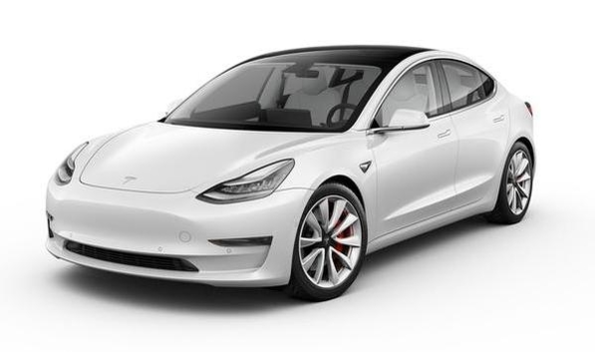
[DigitalToday reporter Jinju Hong] Electric vehicles have fewer maintenance items than internal combustion cars, but they do not require no servicing at all. Tesla’s Model 3 does not need engine oil changes or emissions checks, but owners should regularly manage the cabin air filter, brake fluid, tires and cooling system.
InsideEVs, an electric vehicle outlet, reported on Nov. 16 local time that Tesla’s officially recommended Model 3 maintenance items include replacing the cabin air filter, checking brake fluid, tire care and brake cleaning. Cleaning the radiator and the area around the front camera should also be done as needed.
The most basic item is the cabin air filter. Tesla recommends replacing a standard cabin air filter every 2 years. Vehicles fitted at the factory with a HEPA filter and a carbon filter can be replaced on a 3-year cycle. Brake fluid should be checked every 4 years. Brake fluid absorbs moisture over time, so heavy contamination can affect braking performance.
Brake maintenance is also important. EVs slow down using regenerative braking through the motor, so they use mechanical brakes less often than internal combustion cars. As a result, brake pad wear is relatively slower. There are cases in which factory brake pads remain in good condition even on vehicles that have driven more than 100,000 miles, or about 160,000 km.
In areas where de-icing salt is spread on roads, brake calipers should be cleaned and lubricated regularly. Tesla recommends this work every year or every 12,500 miles, or about 20,000 km, in such environments. That is because mechanical brakes are still used for emergency braking and safety even when regenerative braking is used.
Tires are one of the Model 3’s main maintenance items. Tesla recommends rotating tires every 6,250 miles, or about 10,000 km. Rotation is also needed when the difference in tread depth between tires exceeds 2/32 inch. EVs can wear tires quickly due to strong initial acceleration and regenerative braking characteristics. Tesla advises preparing to replace tires when tread depth falls below 4/32 inch, and replacing immediately when it is under 2/32 inch.
The thermal management system and the area around cameras also need attention. The Model 3 has no engine, but it is equipped with a thermal management system that controls the temperature of the battery and powertrain. If dust or debris accumulates in the radiator connected to the system, cooling efficiency can drop, so it should be cleaned when needed. The front camera used for driver-assistance functions also requires keeping surrounding glass clean to maintain visibility.
Wheel balancing and alignment are items to check when warning signs appear rather than on a set replacement cycle. If the steering wheel vibrates while driving, wheel balancing should be checked. If the vehicle pulls to one side or tires wear unevenly, a wheel alignment check is needed. Checks are also recommended after fitting new tires.
Some items are not included in Tesla’s official maintenance schedule but are worth reviewing for long-term ownership. Key examples are drive unit oil and battery coolant. Some repair shops recommend changing drive unit oil between 60,000 and 100,000 miles, or about 97,000 to 160,000 km. Tesla previously advised changing powertrain oil every 100,000 miles, but it has now removed it from the official maintenance schedule. Related service procedures remain, so owners can have the work done on request.
Coolant that manages the temperature of the high-voltage battery is also a long-term maintenance item. Some repair shops suggest checks every 4 years and believe replacement is needed if contamination is found. Rubber bushings used in the drive unit, steering system and suspension can also lose elasticity or crack over time. If unusual noises occur while driving, related parts should be inspected.
Maintenance approaches differ depending on whether the vehicle is under warranty and the difficulty of the work. During the warranty period, it is common to use a Tesla authorised service centre. After the warranty ends, owners can do relatively simple tasks themselves, such as replacing the cabin air filter or cleaning the radiator. Tesla publishes service manuals online, and another option is using an independent EV repair shop.
Ultimately, EVs have fewer parts and consumables that must be replaced regularly than internal combustion cars, but maintenance does not disappear. Assuming ownership of a Model 3 for 5 years, basic items include a set of tires and multiple rotations, two brake fluid checks, two cabin air filter replacements, brake checks and wiper blade replacements.
Not having engine oil changes and emissions checks can reduce EV running costs, but the need to steadily monitor tires, braking systems and the battery thermal management system is no different from internal combustion cars.
 Jinju Hong
hongjj@d-today.co.kr