
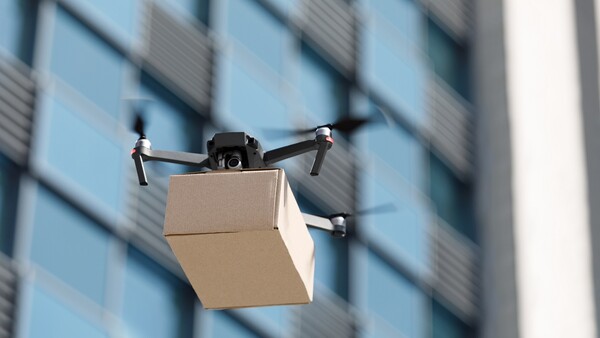
As delivery services using unmanned drones expand rapidly in the United States, an unexpected social issue is emerging. There are concerns that the noise and movement of delivery drones could trigger memories of past terror for people with post-traumatic stress disorder who experienced drone attacks in war.
On Nov. 16, the IT outlet Ars Technica reported that interest is growing in the psychological impact as Amazon, DoorDash and Zipline expand drone delivery businesses.
Amazon plans to expand its delivery drone service to about 500 U.S. cities and towns by the end of this year. DoorDash has also introduced its own drone delivery system, and Walmart decided to build 300 additional delivery hubs in cooperation with Zipline.
The problem is that drones may not be accepted by some war survivors as a simple means of delivery. Cases have been reported in places including Ukraine and Gaza in which soldiers and civilians who experienced drone attacks feel intense anxiety and fear from the sound of an aircraft in flight alone.
A research team led by Joseph L. Bonvie (조지프 본비), a doctor at Massachusetts General Hospital, explained that the distinctive noise made as a drone approaches could induce fear and helplessness even before an attack.
Some medical staff in Ukraine call such reactions dronophobia, or fear of drones. Typical behaviors include staying constantly alert to the presence of drones or trying to avoid their flight sounds.
A case report by Jordanian psychiatrist Mohammad Abu Slaih (모하마드 아부 슬라이흐), which examined 19 patients in Gaza, also observed a strong fear response to drone sounds in all of them. Three children were afraid even to look up at the sky.
Drone attack videos spreading on social media are also cited as a factor that repeatedly brings traumatic experiences back to mind.
The U.S. Army Training and Doctrine Command assessed that sustained vigilance and anxiety over drone attacks could impose a psychological burden similar to the shock from artillery shells in past wars or combat fatigue.
However, military drones and commercial delivery drones differ in purpose and operating environments. There is also a lack of systematic research on how much delivery drones actually trigger symptoms in PTSD patients.
The outlet pointed out that as drone delivery becomes an everyday logistics method, there is a need to consider not only convenience and economic efficiency but also the psychological burden on vulnerable groups such as war survivors.
 Choi Jae-won
ittt_0801@d-today.co.kr