
BMW has begun mass production of high-voltage battery packs for electric vehicles in the United States. By launching its first U.S. EV battery production base, it is strengthening local EV production and its battery supply chain. The first model to use the packs will be the new iX5 electric sports utility vehicle.
On Nov. 16 local time, EV outlet InsideEVs reported that BMW has started mass production of sixth-generation EV battery packs at its Woodruff plant in South Carolina. The plant is about 15 miles, or about 24 km, from the Spartanburg vehicle assembly plant. It will supply battery packs for six Neue Klasse EV models to be assembled in the United States.
The first recipient will be the new iX5. Battery packs will then be supplied sequentially to five other EV models produced at the Spartanburg plant. The strategy is to strengthen U.S. production links by locating vehicle production and battery assembly plants close to each other.
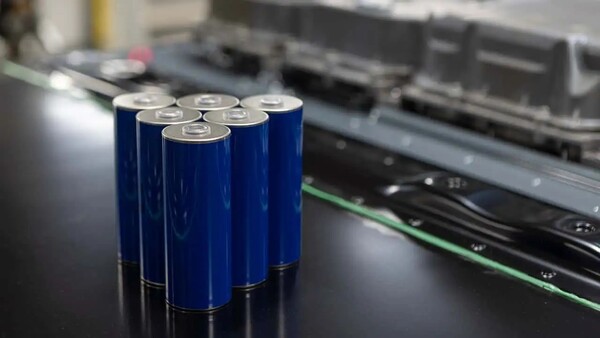
The Woodruff plant is not a facility that manufactures battery cells from scratch. BMW brings in completed battery cells from outside suppliers, then checks key items such as voltage and assembles them into battery packs. It also applies a 'zero defect' policy to screen out defective products.
Battery cell suppliers are divided by region. LG Energy Solution supplies the sixth-generation cylindrical cells used at the U.S. plant, while Samsung SDI supplies cells to plants in Europe. BMW manages battery pack quality through steps including cell inspection and classification, cooling system connection and insulation work. It also conducts real-time monitoring during the assembly process.
The battery design applies Cell-to-Pack technology, placing cells directly inside the pack without modules. The method protects cells with reinforced foam and removes modules, allowing more cells to be placed in the same space. This can increase energy density and secure a structure favorable for improving EV driving range.
Automation and digital technology have also been introduced to the production process. BMW uses an artificial intelligence-based digital assistant system and more than 250 robots to manage battery quality. Production workers complete a virtual reality training program before being deployed on site. More than 300 people currently work at the Woodruff plant.
The Woodruff plant is the fourth production base in BMW's global mass-production network for sixth-generation batteries. Production facilities have also started operating in Debrecen, Hungary; Irlbach-Straßkirchen, Germany; Shenyang, China; and San Luis Potosi, Mexico. For the South Carolina plant, BMW explained that it began construction in September 2023 and reached the mass-production stage in about three years. It installed the first manufacturing equipment in September 2024, and pilot-production batteries first came off the assembly line in the summer of 2025.
An eco-friendly production system is also a feature. BMW said the Woodruff plant will not use fossil fuels in normal operation, and industrial transport vehicles on the site will run on hydrogen. The company said carbon dioxide emissions from the sixth-generation cylindrical battery cells are also 28 percent lower than the battery cells used in the existing iX.
With this mass production, BMW has laid the foundation to link EV battery assembly and vehicle production in the United States. As battery packs produced at Woodruff are supplied to the Spartanburg plant, the local supply chain for U.S.-built EVs, including the new iX5, is expected to be further strengthened.
 Jinju Hong
hongjj@d-today.co.kr