
Clinical studies continue to link athletes' performance and recovery to gut microbes. Hecto Healthcare said on Monday that domestic and overseas clinical findings on the relationship between probiotic intake and exercise indicators were published in recent succession in the international journal Nutrients.
Gut microbes were known to be involved in physiological processes such as nutrient metabolism and immune responses. As the possibility has been raised that they could also affect physical activity, research that had focused on gut health is expanding into exercise performance and recovery.
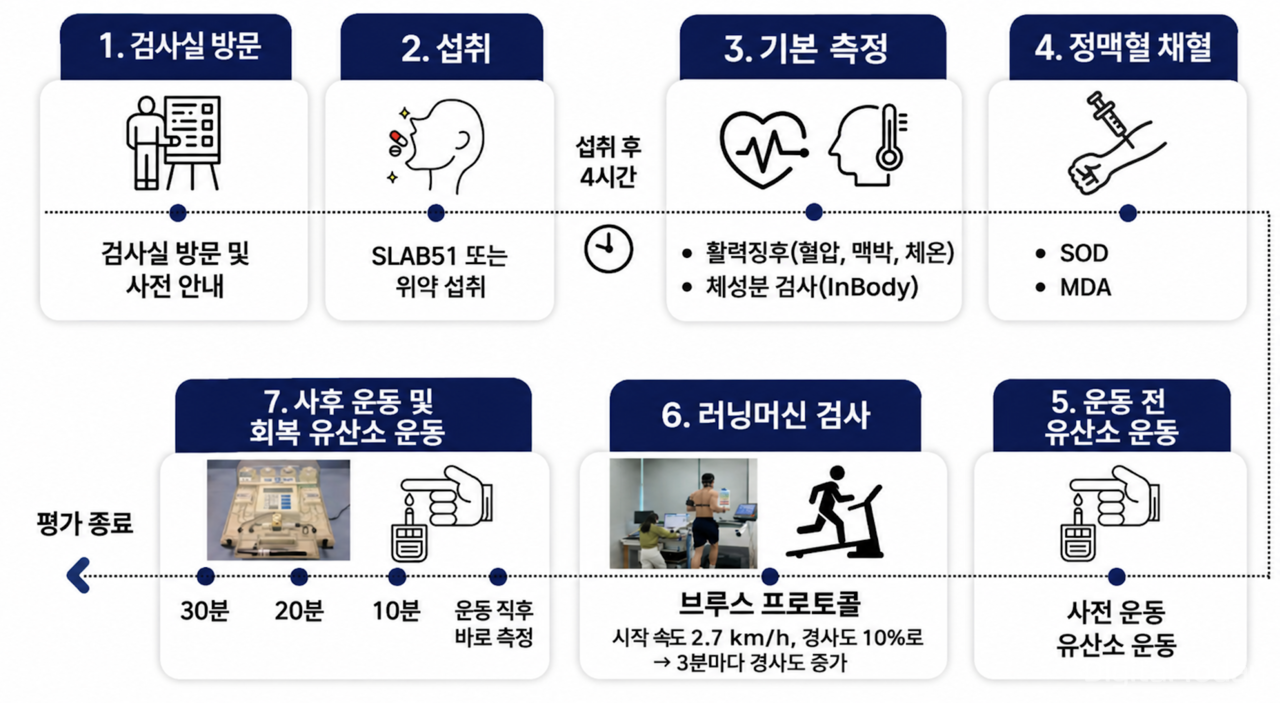
In South Korea, researchers at Korea National Sport University conducted a study of 36 elite athletes using a probiotic compound called SLAB51. SLAB51 is a probiotic compound developed by Italy's Claudio De Simone, combining 8 strains.
The trial was designed as a randomised, double-blind study in which neither participants nor researchers knew who was taking what. It was a crossover study in which the same athlete alternated between SLAB51 and a placebo for 1 week each, allowing the two conditions to be compared within the same person. The researchers included a 2-week washout period between the two intake periods to reduce the influence of the prior intake.
The clinical results showed that when SLAB51 was taken for 1 week, exercise duration was 33.3 seconds longer on average than when a placebo was taken. Duration also increased by about 57 seconds in high-intensity sections where the respiratory exchange ratio (RER), the ratio of carbon dioxide exhaled to oxygen inhaled, exceeded 1.0. The paper was published in Nutrients in October this year.
Overseas, researchers at Beijing Sport University in China published randomised clinical findings in the same journal in September that focused on post-exercise recovery. Twenty-eight university volleyball players took a multi-strain probiotic or a placebo for 8 weeks, then performed jump exercises to induce muscle damage, and were tracked for changes over the next 48 hours.
As a result, post-exercise muscle soreness was lower in the intake group than in the placebo group, and the difference remained after statistical adjustment. Some indicators of knee extension function, a measure of the force used to straighten the knee, also showed meaningful differences 24 hours after exercise. Hecto Healthcare said that if follow-up studies expand exercise events, training levels and intake periods, related scientific evidence is expected to build.
Hecto Healthcare runs its healthcare business with the probiotic specialist brand De Simone and the comprehensive health functional food brand Kim SeokjinLAB as its two pillars. The key ingredient of De Simone is the De Simone Formulation (DSF), which blends 8 beneficial strains. The company said this formula is the only ingredient in South Korea individually recognised by the Ministry of Food and Drug Safety for functionality that could help gut health by regulating intestinal immunity.
 Dae-geon Seok
d2dg@d-today.co.kr