
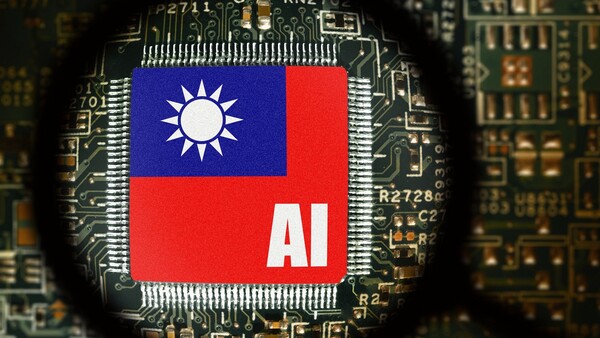
Taiwan's government will secure an additional 10,000 GPUs in 2027 to strengthen competitiveness in the AI industry. It plans to expand private data centre investment and develop computing infrastructure, data and specialised talent needed for AI development.
On Nov. 16 (local time), Taiwan media outlet IT Home reported that the National Science and Technology Council (NSTC) held its 24th committee meeting and presented the status of AI ecosystem building, mid- to long-term science and technology policy and results of AI-based disaster management.
Taiwan's Ministry of Digital Affairs presented five core areas for developing the AI industry: computing resources and data, talent, marketing and funding.
The government-run GPU computing resource pool has supported use by 342 information service companies, and 307 AI models and application services have been developed based on it. Supporting the drafting of test reports at medical institutions is cited as a representative case.
It is also expanding computing infrastructure. The Ministry of Digital Affairs is promoting BOO (Build-Own-Operate) projects in which private companies build, own and operate data centres.
This year, Foxconn affiliate Asiawan Supercomputing and Gigabyte affiliate Technology Power Innovation passed screening and are set to sign contracts by year-end. Two companies also applied in a second round that closed in October, and screening is under way.
Lin Jun-hsiu (林俊秀), director-general of the Digital Industry Department, expected about 10,000 GPUs to be added from 2027. He explained that the current shortage of GPU supply would ease as the insurance industry expands investment in AI computing.
It is also accelerating efforts to secure data for developing AI technology centred on its own country. Taiwan's government collected about 6.4 billion tokens of local-language data from more than 250 public institutions and built a sovereign AI training corpus.
The government's results in training AI industry talent have exceeded 40,000 on a cumulative headcount basis, and are expected to surpass 50,000 next year. It is also pushing commercialisation of AI services through investment support and inter-company cooperation programmes.
The NSTC also disclosed a draft of the 2027-2030 science and technology white paper containing nine key tasks, including semiconductors, sovereign AI, space communications, health and carbon neutrality.
Results from AI-based disaster response were also presented. The National Science and Technology Center for Disaster Reduction applied Nvidia's CorrDiff and StormCast technologies to expand real-time rainfall forecasting coverage to 6 hours from the previous 3 hours.
Wu Cheng-wen (吳誠文), minister of the NSTC, said cyber attacks using AI agents are increasing. He stressed the need to strengthen an AI-based security response system through cooperation among government agencies.
 Choi Jae-won
ittt_0801@d-today.co.kr