
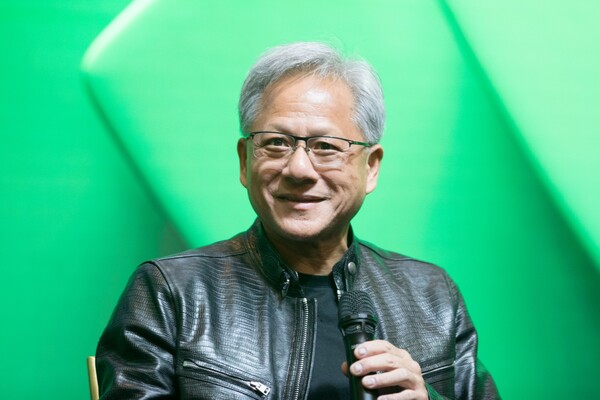
Jensen Huang's resignation has made Nvidia's next management structure and the sustainability of its growth a new market issue. The market is weighing what path Nvidia will take after Huang's exit, with analysis comparing it to Apple's succession after Steve Jobs left. Views are split between concerns that founder-led technological innovation could weaken and expectations that stable growth can continue under professional management.
On Nov. 15, Hong Kong's South China Morning Post (SCMP) reported that Huang resigned on Nov. 13 after reports related to suspicions of an extramarital affair. He led Nvidia for 33 years and grew it into an artificial intelligence chip company and a big technology company with a market capitalisation of about $4 trillion. Nvidia appointed Chief Financial Officer Colette Kress as interim chief executive officer, and the board has begun searching for a successor CEO.
Market focus goes beyond a simple leadership vacuum to Huang's influence on Nvidia's technology strategy and corporate culture. Goldman Sachs' James Schneider said it was a rare case in the tech industry of an unconventional leader stepping down suddenly. He said Nvidia and Apple both share a strong tradition of technological innovation and competitive advantages, and both lost a key leader in a short period of time.
Schneider said Huang was a "core presence" in Nvidia's corporate culture and identity. He said that even if leadership across functions is solid, it could be difficult to maintain the same agility as in the past if an unconventional leader who serves as the central axis disappears.
He also raised the possibility that Nvidia shares could show a similar pattern to Apple after Jobs' exit as the stock is re-rated to a fair company value over the medium term. He forecast that downward pressure on company value could persist until the new management structure and growth drivers become clear.
Others counter that a founder's exit does not necessarily lead to a weakening of corporate competitiveness. SemiAnalysis researcher Dylan Patel said in a Nov. 14 report that Apple's succession process after 2011 was a "representative example of a company that succeeded even after a founder change".
Patel said Nvidia could also shift to professional management and choose a more conservative strategy that puts greater weight on share buybacks and shareholder returns. He added that such changes could be positive for shareholders, but it could become harder to push technological innovation at the same pace as in the past.
Apple's case is a representative point of comparison that shows diverging outlooks. Apple lost Jobs twice. When the board ousted co-founder Jobs in 1985, the company went into a slump and was pushed to the brink of survival until Jobs returned in 1997. It was different when Jobs stepped down for health reasons in 2011 and Tim Cook took over as CEO. Under Cook, Apple increased its company value by about 14 times over the following 15 years.
Talk of Cook possibly moving to Nvidia has emerged in that context. Some have suggested Nvidia should recruit Cook as its next CEO. Cook has stepped down as Apple's CEO and serves as chairman. U.S. President Donald Trump also said on Nov. 13 that Cook was the only person suitable for the position and called him a "legend".
Still, analysis says it would not be easy for anyone, including Cook, to fully replace Huang's role. TF International Securities' Ming-Chi Kuo cited cost management and supply chain operations as Cook's strengths. Those are areas where Nvidia has room to improve, but he said the capability to plan and develop next-generation technologies would be a difficult task not only for Cook but for any successor.
Kuo said the only CEO so far who has proven the ability to apply advanced technologies from multiple fields to AI chips and rack solutions while maintaining a fast commercialisation cycle has been Huang.
Ultimately, Nvidia's future depends on whether it can sustain founder-led innovation or continue stable growth under professional management. As Apple showed two contrasting succession experiences after Jobs' exit, the choices Nvidia makes after Huang and the capabilities of the successor are expected to be key variables shaping the company's technological competitiveness and market value.
Meanwhile, major foreign media including the Financial Times reported on Nov. 15 that Huang discussed the possibility of returning as CEO with close associates, and that key figures in Silicon Valley pushing for his return plan to move to persuade the board and secure White House support. Nvidia's board has not decided on Huang's return, and the company did not immediately comment on the reports.
 Jinju Hong
hongjj@d-today.co.kr