
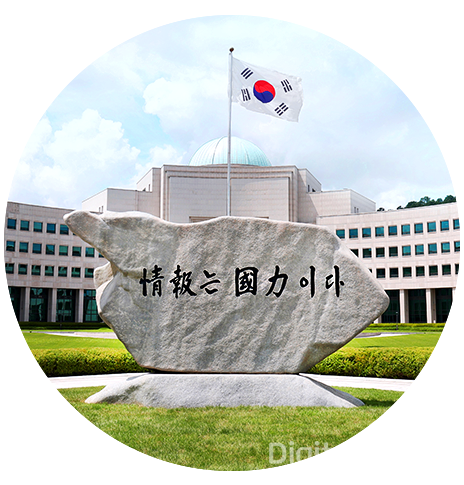
South Korea's National Intelligence Service said on Monday it has released cryptography security standards for state and public institutions and a guidebook for migrating to post-quantum cryptography on the National Cybersecurity Center website, together with the National Security Research Institute.
The NIS said it has shared an understanding of the need to shift cryptographic systems for the quantum era with experts from industry, academia and research, and has coordinated the direction of efforts. It said the two guidelines announced this time are part of those plans.
According to the NIS, the cryptography security standards are criteria for assessing the cryptographic technologies and security levels that should be used in state and public institution systems. They present standards to help each institution choose secure cryptography under consistent criteria. The NIS explained that by setting allowable periods of use by cryptographic algorithm, such as allowing, restricting or prohibiting them, the standards are designed to help institutions prepare steadily for future quantum computer threats.
The post-quantum cryptography migration guidebook is a practical technical guideline that includes preparations needed for migration and phased implementation procedures for state and public institutions. It also presents a method for selecting migration priorities based on factors such as system importance and security risks.
The NIS said it will first release the two guidelines as drafts to gather opinions from institutions and plans to finalise and distribute them in the first half of next year. It also plans to release a cryptographic key management guideline at year-end.
Kim Chang-seop (김창섭), third deputy director of the NIS, said that the so-called Q-Day, when quantum computers can neutralise current cryptographic systems, is approaching. He said it is important to accelerate preparations for the transition because information collected now could be decrypted in the future. Kim said that because migrating cryptographic systems requires substantial costs, effort and time, the NIS will work with relevant ministries and industry, academia and research to build a solid national foundation for the transition.
 Chi-gyu Hwang
delight@d-today.co.kr