
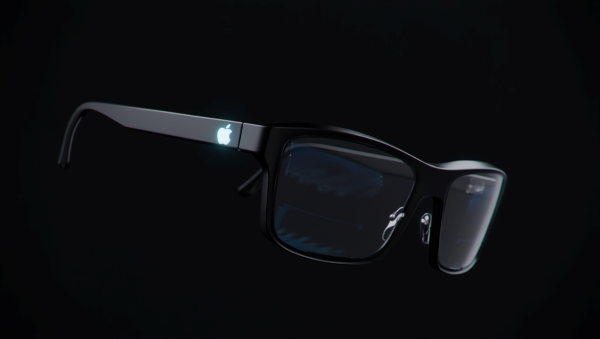
[DigitalToday intern reporter Seung-a Yoo] Apple is preparing to launch smart glasses led by its AI assistant Siri. The product is expected to resemble Meta's Ray-Ban smart glasses, but focus on linking Siri with the iPhone app ecosystem rather than augmented reality functions.
On Nov. 15 (local time), Bloomberg's Mark Gurman reported that Apple is considering unveiling its first smart glasses at the Worldwide Developers Conference (WWDC) in June 2027 and beginning shipments before the end of that year. The specific launch schedule has not been finalised.
The product's core competitive edge is integration between Siri and third-party applications, or apps. Apple is enhancing Siri so it can control external apps in greater detail. The iOS 27.3 beta includes a developer integration feature that goes beyond existing Siri Shortcuts, allowing individual app functions to be used directly through Siri. Apple is encouraging developers to apply Siri integration to iPhone apps before the smart glasses launch. This is expected to let users access various app functions by voice while wearing the glasses.
The smart glasses themselves will not run apps directly. Most tasks will be handled through a nearby iPhone, and the product is expected to be closer to an auxiliary device that extends iPhone functions. The glasses also include Wi-Fi so some functions can be used when an iPhone is not nearby. For example, users can keep listening to music over Wi-Fi after moving away from an iPhone, but the device will not be able to perform all functions like a standalone product.
The internal codename for the prototype currently under development is 'N50'. It is reported to use a scaled-down version of visionOS and a new processor based on past Apple Watch chips. The charging method is similar to MagSafe and uses a flat rectangular charger about the size of a pill. A key feature is that it can be charged while the glasses are being worn.
Design, privacy protection and sound quality are also key development priorities. The prototype is reported to be slightly thinner than Meta's second-generation Ray-Ban smart glasses. Apple is emphasising a design that can be worn comfortably in daily life and privacy features, while also working to secure sound quality suitable for phone calls, music playback and FaceTime audio calls. Bloomberg reported that Apple engineers rate the audio quality as the best in the industry.
Apple aims to enhance Siri and bring forward app integration by developers to provide a range of services from the early stages of the smart glasses launch. With Meta leading in the smart glasses market, attention is focused on whether Apple can compete with a user experience that combines the iPhone and its app ecosystem.
 Seung-a Yoo
ysah@d-today.co.kr