
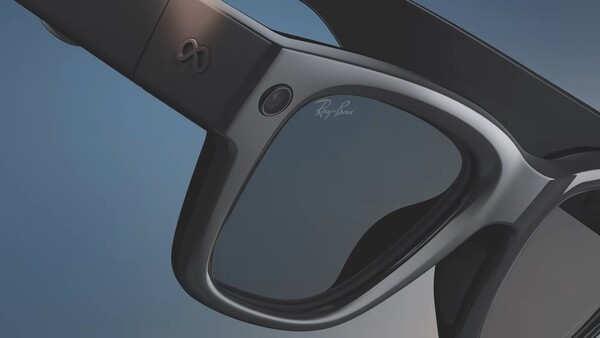
AI glasses equipped with cameras are increasingly being added to lists of prohibited items at courts, schools and military facilities. As concerns grow over privacy violations and illegal filming, the scope of restrictions is also spreading to public places and private facilities.
As of Nov. 15, according to multiple foreign media reports, no country has permanently banned AI glasses nationwide. Pakistan's Punjab province, however, banned the use and sale of camera-equipped smartglasses for 30 days in October 2026. The restrictions also cover glasses with "hidden recording functions" as well as miniature cameras disguised as pens or key rings. Online sales were also banned. Authorities said they received complaints that the devices were used for illegal surveillance, harassment and threats. The measure applies only to Punjab, and specific models were not disclosed.
Courts are the places where smartglasses restrictions were tightened first. New York State banned smartglasses equipped with cameras, microphones or computers from about 1,240 state and local courts from July 20, 2026. There are no exceptions even if the device is powered off, and visitors must leave the device with a uniformed court security officer. Ray-Ban Meta glasses with prescription lenses are also banned, and courts are advising visitors to bring regular glasses separately.
In February 2026, members of the security team wore Ray-Ban Meta glasses during Meta CEO Mark Zuckerberg (Mark Zuckerberg)'s testimony in Los Angeles, sparking controversy. Judge Carolyn Kuhl (Carolyn Kuhl) warned, "If you're recording with the glasses, you have to take them off." It was not confirmed whether any actual recording took place at the time. Courts and tribunals in England and Wales also ban Meta glasses, and security officers can hold the device until the visitor leaves.
Schools have also moved to regulate them. Western Australia banned students, staff and visitors from wearing and using smartglasses at public schools from Oct. 12, 2026. Exceptions can be made for medical and accessibility support or approved educational purposes. Victoria announced similar restrictions and plans to implement them from Jan. 27, 2027. At U.S. SAT test sites, smartglasses are banned even during breaks unless separate accommodations are approved. Violations can result in test scores being cancelled.
Military and private facilities are no exception. The U.S. Marine Corps is banning smartglasses at bases including Camp Lejeune. The City of Canterbury-Bankstown in Australia has restricted their use at leisure centres and swimming pools. Cinemas in Britain are also adopting measures to block the use of camera-equipped glasses over concerns about privacy violations and film piracy. Royal Caribbean allows them to be brought onboard but bans their use in casinos, medical facilities and youth areas.
The Norwegian government is considering temporarily restricting smartglasses in parks, beaches, shopping centres and gyms. No policy has been finalised, and the devices subject to regulation have not been defined. With devices offering different functions, such as Even Realities' G2 without a camera and Ray-Ban Meta and Oakley Meta products that can take photos and videos, the scope of regulation is a point of contention.
Privacy concerns have also led to an investigation. The Paris prosecutor's office in France said it opened an investigation after receiving a report in September 2026 that women were filmed without consent using smartglasses and the videos were posted online. Prosecutors did not disclose the brand of the product involved.
Manufacturers' safety measures have not fully resolved the controversy. Meta says a white indicator light on the front of the glasses turns on when taking photos or videos, and the camera is disabled if the light is detected as having been damaged. But according to the Ray-Ban product guide, some camera-based AI functions in some newer models can operate even when the indicator light is off if no photos or videos are stored. It is not the same as secretly filming, but privacy concerns persist because people nearby may find it hard to tell whether the camera is being used for AI functions.
 Seung-a Yoo
ysah@d-today.co.kr