
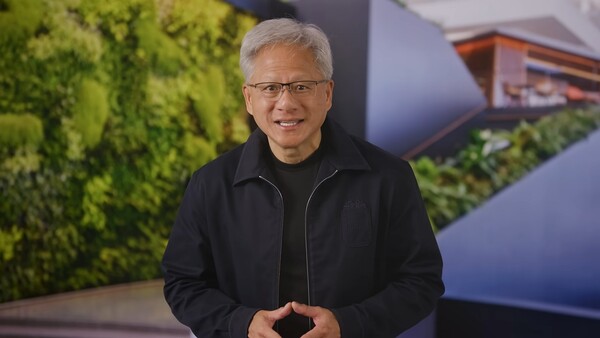
An analysis said the sudden resignation of Nvidia founder and CEO Jensen Huang revealed Silicon Valley’s founder-worship culture and vulnerabilities in corporate governance. It pointed to concerns that a structure concentrating a company’s growth and credibility in a single founder could increase uncertainty across the AI industry.
On Nov. 15, Business Insider spotlighted Silicon Valley’s founder-centric management culture in the wake of Huang’s departure.
Founded in 1993, Nvidia has had Huang as CEO for 33 years. About 60 executives reported directly to him, but there was no clear successor. Nvidia has also cited heavy dependence on a small group of key executives as a management risk in its disclosures.
Huang became a symbol of Nvidia beyond his role as a manager. Meta CEO Mark Zuckerberg called Huang the “Taylor Swift of the tech industry.” In July, a leather jacket Huang had worn sold at auction for $960,000, or about 128,448,000 won.
After Huang’s resignation, calls for his return spread. More than 130,000 people signed an open letter, joined by Silicon Valley figures including Elon Musk and Marc Andreessen (마크 안드리슨). The affiliations listed by signers included about 6,000 Nvidia employees and more than 70,000 shareholders, they said.
Shopify CEO Tobias Lütke (토비 뤼트케) criticised Huang’s departure as a once-in-a-generation mistake and argued there was no successor who could fully replace a founder like Huang.
The outlet analysed the reaction as a case in which a company’s credibility was excessively concentrated in a founder’s personal influence.
Communications strategist Lulu Cheng Meservey (룰루 청 메서비) said, “Advanced AI technology is difficult to verify from outside, making it easy for investors and customers to rely on the founder as an individual.” She said the founder becomes a symbol that guarantees the technology and the company’s future.
Such culture has spread across Silicon Valley. OpenAI CEO Sam Altman and PayPal co-founder Peter Thiel have also compared strong organisational cohesion at successful startups to religious beliefs or cults.
Huang’s case shows that strong founder leadership can drive innovation, but excessive dependence on a specific individual can threaten a company’s sustainability.
Nvidia appointed Colette Kress (콜렛 크레스) as interim CEO alongside Huang’s resignation and named a separate board chair for the first time since the company’s founding.
 Jae-won Choi
ittt_0801@d-today.co.kr