
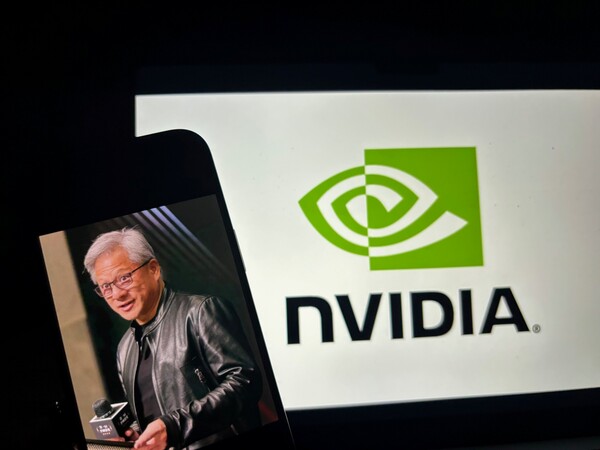
Controversy surrounding Nvidia CEO Jensen Huang (젠슨 황), credited with making the company the dominant force in the artificial intelligence semiconductor market, is spreading and drawing attention to its next leadership. As possible pressure for him to resign is discussed, a list of potential successors is emerging, ranging from outside figures such as AMD's Lisa Su and former Google CEO Eric Schmidt to key Nvidia executives.
TechCrunch reported on Wednesday that succession scenarios the Nvidia board could consider are drawing attention as the possibility is raised that Huang may step down as CEO.
The controversy began after Huang confessed to an extramarital relationship and allegations surfaced involving the other person. The identity of the person has not been clearly confirmed. Several reports have cited Alice Huang, a Chinese-American executive watched by U.S. intelligence authorities over suspicions related to espionage activities for China, and Kimberly Powell, an Nvidia executive who reports to Huang, as individuals involved. Some observers also say the board could demand Huang's departure if the matter escalates.
Still, some see it as difficult for Nvidia's board to make a complete break with Huang. He is a central figure who grew the company into one of the world's most valuable firms. That has fueled talk that if no additional negative developments occur, he could step down as CEO but remain influential by staying on as board chairman. Nvidia currently does not have a separate board chairman role.
Among outside candidates, the figure drawing the most attention is AMD CEO Lisa Su (리사 수). She leads AMD, Nvidia's biggest competitor, and is also known to be related to Huang. But some analysis suggests it is unlikely she would move to a rival at a time when AMD could benefit from any management vacuum at Nvidia.
Former Google CEO Eric Schmidt (에릭 슈미트) has also been named. Jeffrey Sonnenfeld (제프리 소넨펠드), a professor at Yale School of Management, said, "Even if Schmidt were put into Nvidia right away, he could do an excellent job." Schmidt served as Google CEO and has experience as chair of the U.S. National Security Commission on Artificial Intelligence. Still, some point to constraints on selecting him as a successor because he also carries the burden of private-life controversy.
In the semiconductor industry, Intel CEO Lip-Bu Tan (립부 탄) is also being mentioned. His long career in the chip industry is cited as a strength in semiconductor expertise. Intel faces concerns about its future performance outlook despite recent revenue growth. Its business environment is also challenging, with PC prices rising and sales weakening due to memory chip shortages tied to the AI boom. Some see a move to Nvidia, if it materialises, as a new opportunity for Tan as well.
Bret Taylor (브렛 테일러), seen in Silicon Valley as a crisis-management leader, is also mentioned as a candidate. He served as co-CEO of Salesforce and as chairman of OpenAI's board, and currently leads AI startup Sierra. He is seen as someone who could resolve a complex management crisis, having led OpenAI's board during the process in which Sam Altman was ousted and reinstated.
Inside Nvidia, key executives in software and hardware are being discussed as succession candidates. Vice President Ian Buck (이안 벅) contributed to the development of CUDA, Nvidia's core software ecosystem. CUDA has played an important role in Nvidia securing strong dominance in the AI semiconductor market. Analysts and former employees cite Buck as one of the leading internal successor candidates. Some also say his chances could rise if a structure emerges in which Huang remains as board chairman and works with the next CEO.
Senior Vice President of Hardware Engineering Andrew Bell (앤드루 벨) is also included among internal candidates. After graduating from Cornell University, he joined Nvidia about 25 years ago and has held major engineering roles. Chief Financial Officer Colette Kress (콜레트 크레스) is also mentioned as a successor candidate, but some analysts say her suitability could be limited for a CEO role that presents innovation and a vision for the future.
An unusual candidate mentioned is Huang's spouse Lori Huang (로리 황). Lori Huang was Huang's lab partner while attending Oregon State University, and after graduating worked as a microchip engineer at Silicon Graphics. She currently co-manages a family trust. Some analysis says she could be mentioned if a choice is made that places priority on continuity of management at the company.
Still, the candidates now being discussed are closer to scenarios raised by the media and the industry than individuals confirmed through an official succession process. Whether Huang will step down has also not been decided. Even so, the controversy is again highlighting questions about how Nvidia, which leads the global AI semiconductor market, will prepare for the era after founder-led management.
 Jinju Hong
hongjj@d-today.co.kr