
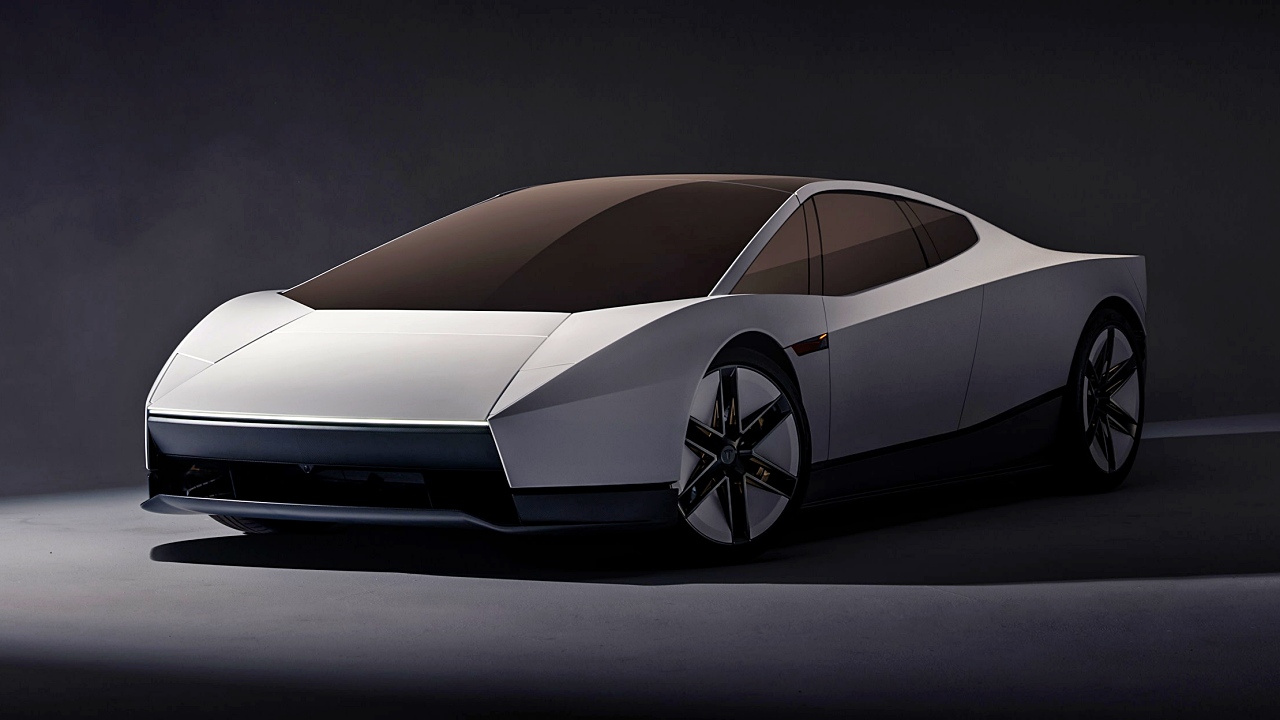
[DigitalToday reporter Jinju Hong] Porsche CEO Michael Reiters (미하엘 라이터스) criticised Tesla's method of unveiling its next-generation Roadster, stressing practical technological innovation and product competitiveness. While Tesla drew attention with an aerial spin and landing performance, Porsche said it would focus on technology and products it can deliver to real customers rather than flashy staging.
On Nov. 11 local time, electric vehicle outlet Electrek reported that Reiters said at a conference in Berlin, "Porsche wants to completely avoid any kind of effects or show." The remark is seen as aimed at Tesla's Roadster unveiling.
The two companies unveiled next-generation flagship models on the same day on Oct. 15. Tesla showed the next-generation Roadster driving up a ramp, spinning in the air and landing on its wheels. Porsche, meanwhile, unveiled its new high-performance model, the Mission S, highlighting traditional sports car technology and product appeal.
Reiters drew a line, saying the two vehicles do not target the same demand base. He also stressed that Porsche will focus on showing innovation that customers can feel rather than attention-grabbing staging.
Tesla's next-generation Roadster appeared about 9 years after a prototype was unveiled in 2017. The centrepiece of the latest unveiling was a so-called "flying" performance using compressed-air propulsion. Elon Musk (일론 머스크), Tesla's CEO, had signalled an aerial demonstration throughout this year, and the schedule was adjusted several times due to propulsion development and other reasons.
Tesla introduced the Roadster in three versions. It said the Performance trim uses an intake fan and can reach 60 miles per hour, about 96 km, from a standstill in under 1.6 seconds. The Thrust trim adds a rear cold-gas propulsion system and is presented as covering the same interval in under 0.9 seconds.
The top-end single-seat Rocket trim applies propulsion units all around the vehicle. It did not receive approval for public road use. Tesla also did not disclose detailed pricing or a production schedule. Musk left only the phrase, "2028, actually," on the launch timing.
Porsche presented the opposite strategy with the Mission S. The model is designed to offer a choice of hybrid and internal combustion powertrains, and was introduced as a mid-engine vehicle positioned above the 911 in Porsche's lineup. Its price is also expected to be set higher than the 911.
Reiters said customer reaction to the Mission S was overwhelming. If it enters mass production, Ferrari is mentioned as a key competitor. It would be Porsche's first return to the top supercar market since the 918 Spyder.
The new car is also tied to Porsche's strategy to restore profitability. Porsche is seeking to improve its profit structure by expanding models with higher prices and greater scarcity. The Mission S can also be seen as part of a move to strengthen its business portfolio around higher-priced models beyond simply adding a high-performance new car.
Market views were mixed on Tesla's unveiling approach. Ferrari CEO Benedetto Vigna (베네데토 비냐) last month gave Tesla Roadster's unveiling performance a "10 out of 10" rating. Porsche, by contrast, appears to put more weight on the technology and product competitiveness needed to support actual mass production and customer deliveries than on flashy staging.
Ultimately, the difference between the two companies does not stop at how they promote new cars. Tesla raised expectations with an unconventional performance and future technology, but has yet to disclose pricing and a production schedule. Porsche focused on higher-priced models aimed at the upper market and on strengthening profitability. The two companies, which unveiled next-generation flagship models on the same day, clearly diverged in how they plan to target the supercar market.
 Jinju Hong
hongjj@d-today.co.kr