
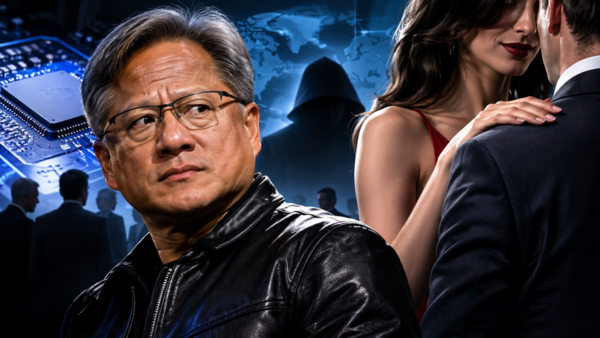
[DigitalToday reporter Jinju Hong] The so-called 'honeypot scandal' surrounding Nvidia CEO Jensen Huang is being cited as revealing structural security weaknesses across the semiconductor industry, beyond a personal-level controversy. As competition over artificial intelligence (AI) semiconductors intensifies, industrial espionage aimed at core technology is increasing. Attempts to lure and infiltrate corporate management are also emerging as a serious security threat, the analysis said.
According to IT media outlet TechCrunch on Nov. 11 (local time), corporate due diligence sources believe cases of luring and infiltration targeting senior semiconductor executives are not limited to the controversy involving Huang. Similar incidents that have not been made public are occurring across the industry, they said.
These concerns are growing alongside the rapid expansion of the AI industry. As semiconductors emerge as a core asset in AI competition, related companies have become prime targets for technology leaks and economic espionage. In particular, the account said pressure to infiltrate semiconductor companies is increasing given that the Chinese government has conducted economic espionage for decades.
There is also concern that the lifestyle of some executives who have accumulated vast wealth from the AI boom could increase security risks. Senior executives who can access a company’s core technology and information are in an environment where they can easily become targets for outside forces, it said.
Nate Singer, CEO of corporate due diligence firm Heron Intelligence, said there are many similar cases in the semiconductor industry. Heron Intelligence is a firm that investigates risk factors related to a company ahead of large-scale acquisitions or executive hiring.
Singer said the Nvidia case is particularly severe, but he claimed there are more similar incidents that are not known externally. He said he receives tips from former employees about inappropriate behavior by senior executives, and that some executives are actually crossing lines they should not cross.
A case he posted on LinkedIn starkly shows the industry’s concerns. The wife of a company CEO suddenly appeared in a board meeting room and protested that her husband and an executive from another company had been traveling on the company jet with several young women. Singer said it was later found that these women were state-backed actors.
Singer stressed that such cases are shocking but not unusual. He said at least 3 similar reports have been confirmed by him, and he suspects there are far more cases that have not been disclosed. He pointed to the key issue as not being individual women but that they are infiltrating inside companies.
That semiconductor technology is a major target of industrial espionage is also confirmed in past investigation and prosecution cases. In recent years, dozens of indictments have followed over trade secret theft, and in 2006 there was a case involving TSMC.
In 2017, 4 former executives of a Silicon Valley semiconductor equipment manufacturer were indicted on charges of stealing trade secrets for use at a Chinese rival. The indictment at the time stated that the leaked targets included mass-production technology for semiconductor wafers used in lighting equipment, flat-panel TVs and smartphones.
The account said luring and infiltration cases that involve sexual elements are rarely made public because the reputational and business burdens that companies and executives must bear are large. Singer claimed that many in the industry’s upper ranks effectively condone such threats despite knowing they exist.
The controversy shows that protecting semiconductor companies’ technology cannot be resolved through cybersecurity or internal controls alone. That is because the private lives of key personnel and executives, corporate culture and executive vetting systems can also be linked to technology leak risks.
As competition between countries over AI semiconductors intensifies, how much companies strengthen security checks and executive vetting aimed at management is emerging as a new task.
 Jinju Hong
hongjj@d-today.co.kr