
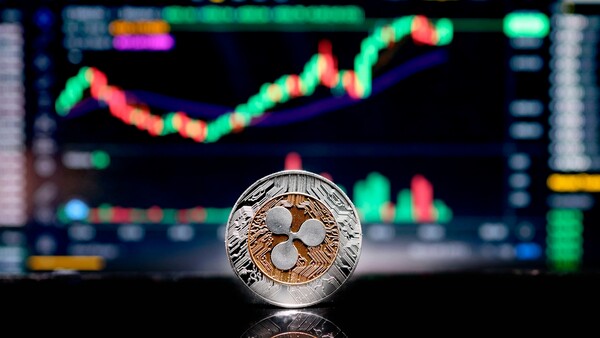
[Digital Today reporter Yoonseo Lee (이윤서 기자)] Asset manager 21Shares assessed XRP as a cryptocurrency that is widely known but also frequently misunderstood. It said portfolios should approach it as a secondary asset rather than a core holding.
On Nov. 10 (local time), blockchain media outlet The Crypto Basic reported that 21Shares stressed the need to distinguish between network growth and a token’s value.
It said XRP, the XRP Ledger (XRPL) and Ripple should first be distinguished. The XRP Ledger is a public blockchain network, and XRP is the network’s native asset. Ripple is a private company that develops products that use or connect to it, and while it is a major contributor, it does not unilaterally control the network.
According to 21Shares, more than 150 known validators participate in the XRP Ledger. Transactions are typically finalized within 3 to 5 seconds, and fees are less than 1 cent. It cited fast processing and low costs as strengths as a payments infrastructure.
It cited four changes in investment conditions: easing regulatory uncertainty, broader institutional access, expanding use cases and supply structure. It assessed that regulatory clarity increased after the lawsuit between the U.S. Securities and Exchange Commission and Ripple concluded in August last year, and that more regulated financial products now allow investment without directly managing wallets or private keys.
On usage, it highlighted the growth of the stablecoin RLUSD and billions of dollars’ worth of tokenized assets on the XRP Ledger. On supply structure, it said all 100 billion XRP were issued at launch and no additional issuance is planned, but the deflationary effect is limited because the amount burned through transaction fees is small.
Even if network use increases, it does not necessarily lead to sustained demand for XRP. That is because institutions may hold XRP only for the few seconds needed to move funds, even if they use it as a bridge asset for exchanging between currencies. 21Shares said how much network growth translates into an increase in XRP’s value remains a key issue.
Against that backdrop, it classified bitcoin as the central axis of a portfolio and XRP as a secondary investment target, a “satellite asset.” It assessed XRP as suitable for investors focusing on tokenized assets via the XRP Ledger, inter-institution payments and the potential spread of stablecoins.
As a risk factor, it pointed to past price declines exceeding 90 percent. 21Shares stressed that investors should examine high volatility alongside the XRP Ledger’s growth potential, and the structure by which network performance translates into token value. It said evaluating XRP’s investment value ultimately requires checking not only whether usage expands but also whether that leads to sustained demand.
 Yoonseo Lee
yslee@d-today.co.kr