
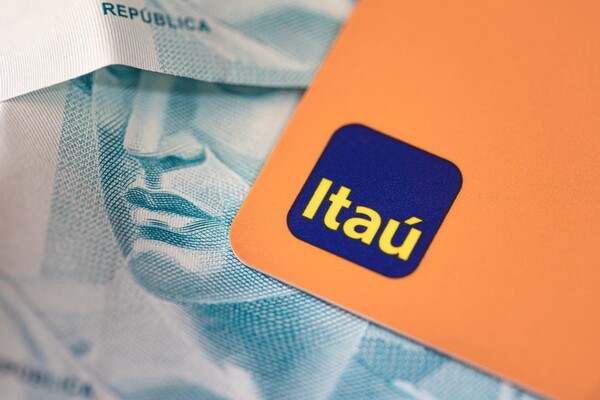
Itaú Unibanco, Brazil’s largest private bank, has formally registered with the Central Bank of Brazil as a cryptocurrency service provider. The filing covers cryptocurrency brokerage and custody.
The move comes after Brazil’s crypto licensing framework began operating in earnest, according to blockchain outlet Bitcoin Magazine on Oct. 28. The central bank is requiring all firms that hold, move or trade cryptocurrencies on behalf of customers to register as regulated entities. Itaú’s filing signals it intends to remain a formal operator under the new system. If Itaú Unibanco begins crypto trading and custody services, it would be the first such case among local banks.
For Korean readers, the most notable point is the custody requirements. Providers that hold customer assets must manage customer assets separately from company funds. They must also meet minimum capital requirements. They must additionally follow governance, internal control and anti-money laundering standards applied at the level of securities brokers.
As a result, customers using a licensed bank gain clearer legal status than users of unregulated apps or overseas exchanges. For operators, regulatory costs and audit and reporting obligations increase. The outlet said regulated crypto businesses face compliance costs, audit duties and reporting responsibilities, which could be a burden for smaller rivals.
Itaú’s crypto business had already begun before the new rules. Itaú disclosed plans for crypto custody as it built a tokenisation platform in 2022. In late 2025, it enabled retail customers to buy and sell bitcoin through its investment app Ion. At the time, Itaú directly provided custody for the cryptocurrencies traded on Ion. The original report said this showed Itaú’s crypto business was already an operational reality before it gained a regulatory status.
Regulatory changes were concentrated in 2025 and early 2026. The Central Bank of Brazil created a new licensing category for crypto service providers through Resolutions 519, 520 and 521. The name is SPSAV. The rules took effect on Feb. 2, 2026.
The new framework divides operators into three categories, such as intermediaries, custodians and brokers. It requires formal segregation of customer and company assets, minimum capital requirements, customer protection, governance, internal controls, security and anti-money laundering standards. Resolution 521, in particular, brought crypto trading under the foreign-exchange regulatory framework. It applies a $100,000 cap to transfer transactions with unauthorised counterparties. It is strongly aimed at channelling cross-border crypto movements into regulated channels.
Itaú’s filing has drawn more attention because of the timeline. Operators already in business when the new system took effect had to apply for a licence within a grace period. The original report said Itaú’s filing read not as a simple status update but as a response at a time when pressure was growing.
The regulation does not end there. The Central Bank of Brazil approved stricter rules on July 1, 2026. From 2027, operators must meet financial soundness requirements closer to those for securities brokers and distributors. Institutions in Segment 5, a group of small banks subject to simplified regulation, were also barred from providing crypto services.
As a result, Brazil’s crypto market is more likely to be reshaped around larger, better-capitalised financial firms. Itaú belongs to the group that can benefit from this regulatory direction. The trend among Brazil’s major lenders to keep crypto within the domestic financial system rather than leaving it with offshore platforms is also expected to become more pronounced.
 Jinju Hong
hongjj@d-today.co.kr