
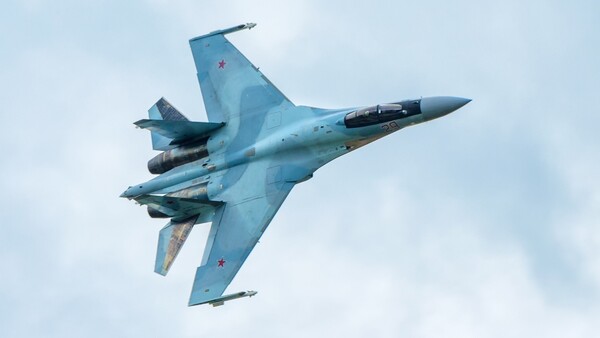
Russia has moved to design next-generation aircraft using AI. As Western technology sanctions make it harder to secure software needed for aircraft development, it is seeking technological self-reliance by combining homegrown AI and design programs.
On Oct. 28 (local time), IT outlet TechRadar reported that Russia's United Aircraft Corporation (UAC) is testing early-stage design for new aircraft using the AI model GigaChat developed by top lender Sberbank.
UAC is using GigaChat to review various airframe shapes and design configurations. It aims to raise development efficiency by quickly comparing multiple alternatives before detailed design. It may apply AI to structural strength and aerodynamics calculations in the future, but it is currently in the early experimental stage.
Sergey Korotkov (세르게이 코로트코프), UAC’s chief designer, stressed that AI should be adopted when it helps solve real engineering problems. He said the aim is to support engineers’ analysis and judgment rather than completely replace existing design methods with AI.
The experiment is tied to Russia’s aviation industry shift to domestically made software. After the invasion of Ukraine in 2022, Western companies such as Dassault Systemes, Siemens and Autodesk withdrew from the Russian market, causing disruptions in aircraft development. In response, UAC introduced Russian design software on about 4,000 engineering computers and replaced nine core modules that manage aircraft development information.
In particular, it worked with Sberbank to integrate AI into the local design platform T-FLEX. UAC claimed this made the design of reinforcing structures inside aircraft wings up to 11 times faster than before. The performance gains have not been independently verified.
UAC produces Sukhoi Su-57 and Su-35 fighter jets and the MC-21 passenger plane, but it did not disclose whether the AI experiment is linked to the development of a specific fighter. No concrete plan to develop a new fighter to counter the U.S. F-22 has been confirmed.
Russia is also facing delays in aircraft development as it replaces Western parts with domestic alternatives. President Vladimir Putin acknowledged in June that development was delayed by about 2 years due to wing problems with the MC-21. The Russian government aims to complete certification of the domestically produced MC-21 by the end of 2027.
Attention is focused on whether expanded use of AI can reduce reliance on Western technology and improve development efficiency in Russia’s aviation industry.
 Choi Jae-won
ittt_0801@d-today.co.kr