
[Digital Today reporter Jinju Hong] General Motors will keep radar and lidar in its 2028 model-year highway self-driving system. Unlike Tesla, which sticks to a camera-centred strategy, GM plans to combine multiple sensors to improve safety. It will also introduce a step-by-step response system to reduce situations in which control is suddenly handed back to the driver.
On Oct. 27, the electric-vehicle outlet InsideEVs reported that Sterling Anderson (스털링 앤더슨), GM's chief product officer, said in an interview that there are limits to a self-driving approach that uses only cameras. "If you shrink it down to vision-only, the laws of physics create problems in certain situations," he said. "Radar is very inexpensive, so taking it out makes no sense," he said.
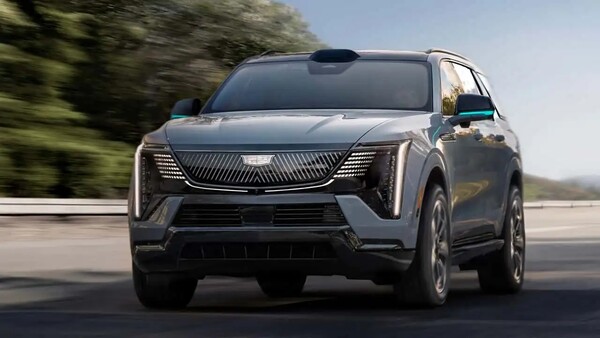
GM's advanced Super Cruise under development is set to be installed in the 2028 Escalade IQ. A key feature is supporting highway driving by using cameras, radar and lidar together. GM is aiming for a self-driving system that can operate even when the driver is asleep.
Anderson stressed that each sensor offers different strengths. Cameras can have limited visibility in severe weather such as heavy fog, while radar is strong at gauging an object's distance and relative speed. Lidar is used to precisely recognise the surrounding environment. The strategy is to combine multiple sensors to offset the limits of each technology.
He explained that lidar can also help train camera systems. Tesla, by contrast, has adopted a camera-focused approach for self-driving in personal vehicles, and Elon Musk has criticised competitors that use lidar. GM's policy highlights differences in the industry over the sensor set needed for self-driving.
GM also decided to change how it hands control back to the driver. Instead of immediately asking the driver to take over the moment the system detects its limits, it will request intervention gradually over about 10 minutes. If the driver does not respond, the vehicle is designed to move toward a highway exit and stop safely, then wait until the driver intervenes again.
Anderson said, "We do not dynamically hand driving back," distancing the company from a sudden handover approach. He added, "This is not Level 3."
GM plans to implement advanced self-driving functions first on highways and then expand the range of application. The strategy is to secure safety through a multi-sensor system and a predictable control handover process. Details such as operating conditions and the scope of application could change depending on what is disclosed later.
 Jinju Hong
hongjj@d-today.co.kr