
When AI agents enter the workplace, what will people do all day?
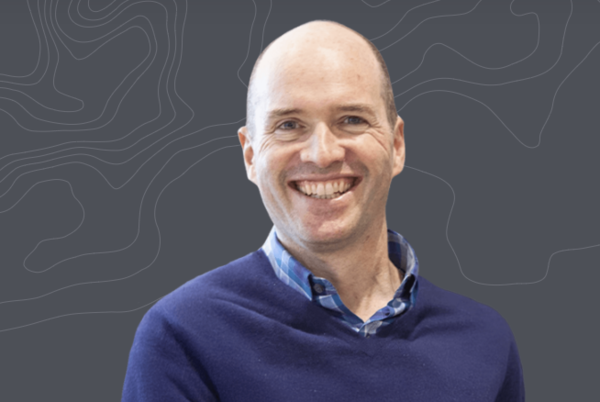
Ben Horowitz (벤 호로위츠), co-founder of Silicon Valley venture capital firm Andreessen Horowitz (a16z), recently posted on social media platform X (Twitter) that Databricks has the answer, drawing attention. a16z led Databricks' Series A investment in 2013.
Horowitz's post argued that looking at the Databricks case shows AI will make everyone managers rather than make everyone engineers.
According to him, Databricks is a company with one of Silicon Valley's least-known success stories. Its annualised revenue exceeds $7 billion and its growth rate reaches 80 percent. He said there are many things worth noting in terms of AI transformation (AX) as well.
Until 3 years ago, humans were involved in every task on the Databricks platform, but now queries sent by agents outnumber those from people, he said. Agents create more than 17 million databases a day.
Horowitz paid particular attention to the "system of record".
A system of record refers to the foundation for officially storing and managing a company's core information. Horowitz said, "AI has a context problem, not an intelligence problem." He also relayed comments by Databricks CEO Ali Ghodsi (알리 고드시) that "company knowledge, authority and evaluation standards that used to exist only in the heads of skilled employees must be moved into records that agents can read."
The company said its own test results showed that connecting the company's proprietary knowledge system to agents lifted answer accuracy from about 50 percent to 84.5 percent.
As AI agents spread, changes in organisational structure are also becoming pronounced. In 20th-century companies, middle managers in pyramid structures carried information up and down, but if AI takes on that role, frontline employees can find the information they need directly and work without going through higher lines.
Horowitz shared the case of a finance analyst at Rivian who did not know SQL but used Databricks' natural language-based data analysis tool, Genie, to create a revenue dashboard for the CFO.
Views differ on how flat organisations will become. Jack Dorsey, founder of Block, sees hierarchies and middle management layers as blocking information flow, while Ghodsi's position is that even if information couriers shrink, managers who develop people and set priorities are still needed.
Engineering work is already coming to resemble management. Horowitz said, "Define the scope of the problem, break up the work, assign it to multiple coding agents, and review the output," and called it a "second manager revolution." It means management is not disappearing, but the era when a professional manager class monopolised management is ending.
With all competitors borrowing the same AI models, what determines competitiveness is who holds the data.
Horowitz said, "Only companies that accumulate their reasoning and human-edited histories as their own records do not lose what they learned even if they switch to a new model." He added, "Owning data alone does not create a moat. You have to improve faster than competitors with data." He also said, "Over the next decades, what people will do at work is everything that still has not found an answer."
 Chi-gyu Hwang
delight@d-today.co.kr