
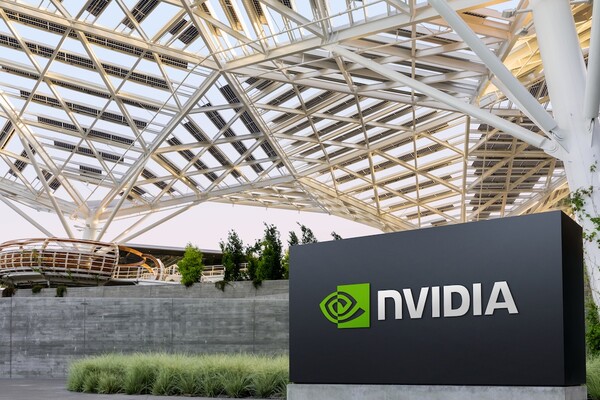
Nvidia said on Oct. 28 it will work with Amkor Technology, Ibiden, King Yuan Electronics Co (KYEC), Samsung Electro-Mechanics, Siliconware Precision Industries (SPIL) and Unimicron Technology to expand production capacity for substrates, advanced packaging, testing and optical engines. It plans to diversify its supply chain by supporting manufacturing expansions at new and existing suppliers to prevent component bottlenecks caused by surging demand for AI infrastructure.
Nvidia plans to secure substrate production capacity by increasing it 2.5 times over the next 3 years. Under a contract signed earlier this year, Ibiden is pursuing an expansion of its Ono plant in Japan, and Nvidia will provide several billion dollars in advance payments for capacity. The plant's capacity will grow to 3 times its current level, and additional output will be rolled out in stages starting in the first quarter of 2028.
Samsung Electro-Mechanics will also newly join Nvidia's substrate supply chain. It will cooperate on building a new plant, including upgrades to facilities in Sejong and Busan. The volume allocated to Nvidia by 2028 is expected to account for a significant portion of Samsung Electro-Mechanics' annual package substrate production capacity.
Unimicron received a capacity reservation agreement from Nvidia for an expansion of its KF substrate operations in Taiwan. Additional volumes will begin to come out from the second quarter of 2027 and reach a peak by mid-2028.
Amkor will expand advanced packaging capacity with Nvidia in South Korea. It aims to increase interposer wafer production capacity by more than 300 percent by the end of 2028. Interposers are intermediate substrates that transmit signals between chips and substrates.
It will also strengthen cooperation on semiconductor testing and optical technology. Nvidia expects capacity to double by 2027 through facility expansions in the United States, Taiwan and Singapore.
KYEC will build new testing facilities and equipment in the United States using an advance payment for capacity reservations worth $1.1 billion from Nvidia, with a target for mass production to begin in April 2027. Expanded facilities in Singapore are expected to enter mass production from February 2027. SPIL will increase optical engine production capacity in Taiwan for co-packaged optics, or CPO, which exchanges data between chips through optical signals, to 15 times by mid-2027. It aims to double that again by the end of 2028.
Nvidia CEO Jensen Huang (젠슨 황) said, "We are in the middle of the largest infrastructure build in human history," and added, "Demand is very large, and the biggest constraint right now is production capacity."
He added, "Nvidia's supply chain partners are the world's top manufacturing companies," and said, "I am grateful that they are helping by expanding capacity around the world so they can scale production and supply AI supercomputing systems that power a new industrial revolution."
 Daegeon Seok
d2dg@d-today.co.kr