
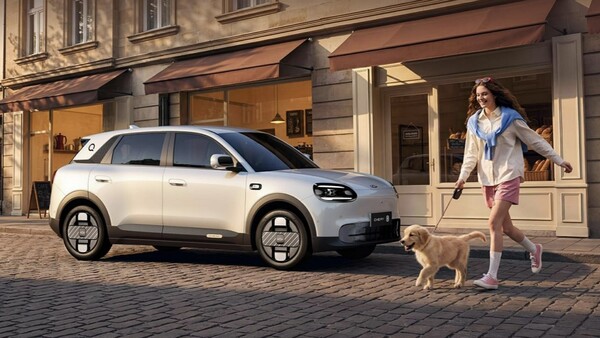
Chinese automaker Chery is exploring a U.S. market entry despite U.S. rules on China-made connected cars and high tariffs. It is considering developing vehicles that exclude China-made software and hardware. It is also weighing cooperation with U.S. automakers.
InsideEVs recently reported that Chery Vice President Charlie Zhang (찰리 장) told Reuters in an interview that it was reviewing various options to enter the United States and was open to cooperation with local automakers.
Zhang said he was confident it could find a solution, from a technical standpoint, that does not rely on China-made hardware and software. He did not disclose specific partners, the business approach or a launch schedule.
Chinese automakers currently face difficulty entering the U.S. market due to high tariffs and data security rules. The U.S. government is restricting the use and sale of connected-car technology linked to China and Russia on national security grounds.
Under U.S. Commerce Department rules, the use of certain China- and Russia-related software will be banned starting with 2027 model-year vehicles. U.S. sales of connected cars produced by manufacturers controlled by those countries will also be restricted. Import limits on related communications hardware will apply starting with 2030 model-year vehicles. As a result, excluding China-made parts does not automatically allow Chery to sell in the United States. It also must address tariffs of more than 100 percent imposed on China-made cars.
Chery has shown strength in overseas exports rather than the Chinese domestic market. It is expanding in global markets, including Europe, with brands such as Omoda, Jaecoo and Jetour. In Britain, the Jaecoo 7 ranked No. 1 in new-car sales in March this year.
It is also stepping up efforts to target the North American market. Chery plans to launch its brand in Canada early next year. In the United States, it is expected to take considerable time before actual sales, as it has yet to finalise a partner and measures to respond to regulations.
 Jae-won Choi
ittt_0801@d-today.co.kr