
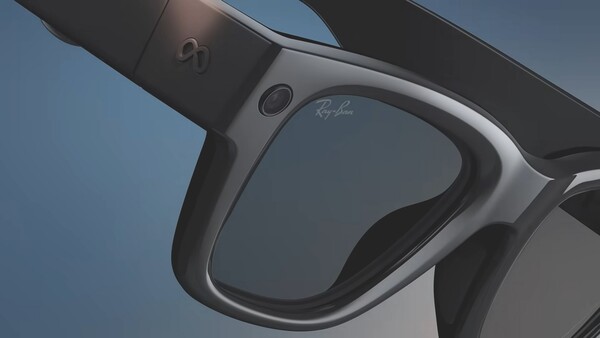
[Digital Today reporter Jinju Hong] As smart glasses gain attention as a next-generation consumer device, interest is also focusing on how to identify them around you.
Because they often look similar to ordinary glasses, it is not easy to tell whether someone is wearing them. But some clues can be spotted through frame structure, indicator lights and how the wearer operates them, Engadget, an IT media outlet, explained on Oct. 27 (local time).
Smart glasses often have thicker frames and temples than ordinary glasses. Models with cameras may have a small camera on the outside of the lens, and the back of the temple may include elements that look like a charging port or a vent. A notably thick frame or small components around the lenses can be clues worth checking.
Indicator lights can also be checked when gauging whether recording is taking place. Many smart glasses are designed to switch on a small light-emitting diode (LED) when taking photos or videos. But not all products work the same way. A missing indicator light does not mean there is no recording function, and an indicator light does not mean recording is actually under way.
Differences by product type also need to be considered. Low-priced imitation products without recording indicator lights are said to be sold on online platforms such as TikTok Shop and Temu. By contrast, some products, such as Ray-Ban Meta audio glasses, are designed around audio features without a camera. That makes it hard to judge the device type and functions based on the frame shape or an indicator light alone.
That is why the wearer’s behaviour should also be considered. Repeatedly pressing the temples, or pausing and staring blankly ahead while issuing voice commands, could be actions used to operate smart glasses. But such behaviour can also appear when adjusting regular glasses or using other devices, so it should not be used as the sole basis for 판단.
Apps that search for nearby devices can also be used as a supplementary tool. Engadget introduced Nearby Glasses and JookiOff as smart glasses detection tools. These apps are designed to check whether smart glasses are nearby based on Bluetooth signals and some device identification information. But detection may be difficult if the wearer turns off Bluetooth, and there is also a possibility of mistakenly identifying other devices as smart glasses. Engadget also pointed out that such apps are not a completely reliable means.
In suspicious situations related to smart glasses, it is important to prioritise safety over hasty confrontation. Rather than concluding from someone’s behaviour alone that they are filming secretly or immediately challenging them, it is better to keep your distance first. If someone actually follows you or threatening behaviour continues, you can move to a safe place and, if necessary, ask authorities for help. In meetings or events where confidential information is exchanged, another option is to prepare guidance in advance restricting the wearing of smart glasses.
As smart glasses spread in daily life, concerns about privacy violations could also grow. Since it is difficult to perfectly confirm filming based only on a device’s appearance or detection apps, it is important to understand the limits of technical clues and set response guidelines that avoid unnecessary conflict.
 Jinju Hong
hongjj@d-today.co.kr