
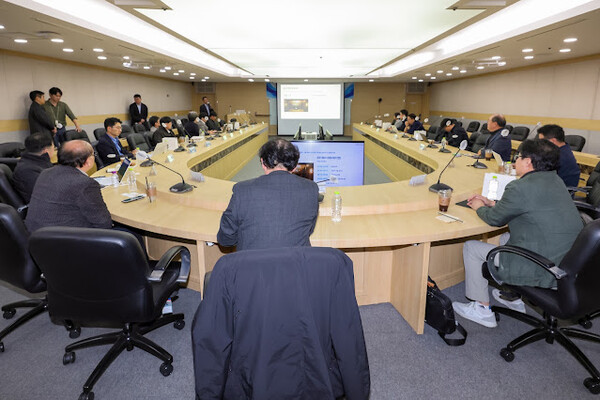
KT said on Oct. 28 it has launched the 6G Security Insight Group (6G SIG) with the Korea Institute of Information Security and Cryptology's 6G Security Research Group to respond to next-generation network security technologies.
The 6G SIG is a consultative body in which industry, academia and research experts in 5G and 6G security discuss security threats and response technologies for next-generation networks. KT's Future Network Lab and the Korea Institute of Information Security and Cryptology's 6G Security Research Group will jointly run it. It will discuss security threats and response technologies for next-generation networks.
Through regular meetings and technology seminars, the 6G SIG plans to focus on 6G security architecture and core technologies, AI-based radio access network (AI-RAN) security, quantum security and zero trust-based mobile network security. It will share trends in security technology discussions at international standards bodies including 3GPP, ITU-T, ETSI, IETF and IEEE and identify joint research and development tasks. It also plans to expand its scope of activities through future cooperation on international standardisation.
At the first meeting held on Oct. 27 at KT's Umyeon Research Center, experts by field attended, including 5G and 6G security, quantum security, AI cybersecurity, non-terrestrial network (NTN) and satellite communications security, and zero trust. They discussed operating direction and cooperation plans.
Il-sun Yoo (유일선), chair of the Korea Institute of Information Security and Cryptology's 6G Security Research Group, said, "6G security is an area that requires expertise at the same time not only in mobile communications but also in AI, quantum technology and satellite communications." He added, "We will contribute to invigorating domestic 6G security research and international standardisation activities."
Jong-sik Lee (이종식), head of KT's Future Network Lab in the network division, said, "We will continue to identify security technologies and research tasks needed for future networks in cooperation with experts in the 6G era."
 Jin-ho Lee
jhlee26@d-today.co.kr