
The government will strengthen cooperation among ministries to expand the AI transition (AX) across the economy and industry. It will overhaul the implementation framework for the seven SEED projects and speed up AI adoption in maritime and fisheries and in local administration, as well as the construction of regional AI data centres.
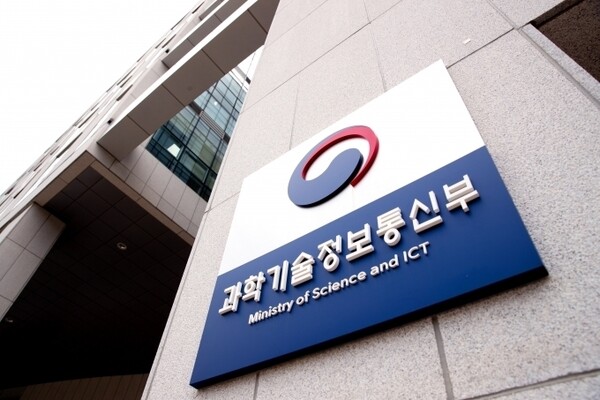
The Ministry of Science and ICT and the Ministry of Finance and Economy held a joint meeting of ministers for economic relations and ministers for science and technology relations at the government complex in Seoul on Oct. 28. It was the first time since the launch of the science and technology ministers' meeting in November last year that it held a joint session with the economic ministers' meeting.
The meeting discussed the direction for the seven SEED projects and ways for cross-ministry cooperation, the maritime and fisheries AX strategy, plans to build a next-generation common system for local administration, and a regional revitalisation investment fund programme.
The government will first shift the seven SEED projects from a focus on individual programmes to a focus on core goals. The seven SEED projects are national research and development programmes to foster key future technologies such as small modular reactors (SMRs), nuclear fusion, renewable energy, quantum, aerospace, advanced bio and advanced supply chains. To meet sector-by-sector goals set for 2030 and 2035, the government will strategically link ministry-level R&D programmes and investments.
It will also form a public-private joint platform, the Frontier Board, to reflect private-sector demand in policy. It will build a cooperation system from technology development to demonstration and industrialisation, and jointly address obstacles such as regulations and licensing. It will draw up a detailed implementation plan within this year and push ahead in earnest from next year.
The government will also expand AI transition by industry. Through the maritime and fisheries AX strategy, it decided to apply AI technology to key areas including port automation, autonomous ships and smart aquaculture. It will build a port automation testbed at Gwangyang Port by 2028 and develop physical AI-based autonomous unloading and autonomous transfer technology. It will also pursue securing core technologies for fully unmanned autonomous ships and introduce autonomous maritime trash collection robots.
It will also revamp local administration systems based on AI and cloud. It will integrate administrative systems currently dispersed across 243 local governments into cloud environments at the level of 16 cities and provinces, and standardise administrative documents and data into formats suitable for AI use. It plans to place the project order by the end of this year and open the system in phases from 2028 through the end of 2029.
The government will also move to expand regional AI infrastructure. Through the ninth project under the regional revitalisation investment fund, it will build an AI-only data centre in Pohang, North Gyeongsang Province, with a total project cost of 600 billion won. With a power reception capacity of 40 MW and an IT load of 32 MW, it is scheduled to be completed in November next year and begin operations in January 2028. The government will support the project by simplifying the local finance investment review process.
The meeting also discussed social policies centred on housing, jobs and retail finance, and steps to strengthen the functions of retirement pensions. The government will pursue a plan to gradually mandate external accumulation of retirement benefits from 2028, starting with workplaces with 100 or more employees.
Meanwhile, a ban on hoarding urea solution and urea, and syringes and needles, introduced in response to supply instability stemming from the Middle East war, will end on Oct. 31. The government took into account that domestic urea inventories remain at a stable level of 4 to 5 months' supply and that the supply of syringes has also improved.
Bae Kyung-hoon (배경훈), deputy prime minister and minister of science and ICT, said close cooperation among ministries is important for the results of technology development to lead to the creation of new industries and markets. He said the government will bring together capabilities in science and technology and economic policy to create new growth engines.
Lee Hyung-il (이형일), deputy prime minister and minister of finance and economy, stressed that science and technology policy and economic and industrial policy must now move as one body, from R&D in fundamental technologies through demonstration and commercialisation to fostering new industries.
 Jin-ho Lee
jhlee26@d-today.co.kr