
General Motors plans to use artificial intelligence to cut vehicle development time from the current 4 to 5 years to 2 years. It is also set to overhaul batteries, vehicle electronic architecture and autonomous driving technology across the board.
On Oct. 21 local time, IT media outlet The Verge reported that GM unveiled an EV, AI and autonomous driving strategy at a technology event in New York called GM Forward to respond to competition from Chinese automakers.
The core is to shift vehicles to a central computing-based software platform. GM set a goal of halving development time by adopting "digital thread virtualization" that links design, engineering and manufacturing into a single digital system. It said it validated more than 300,000 virtual battery designs before building physical prototypes, completing the process from initial concept to development programme approval in a month.
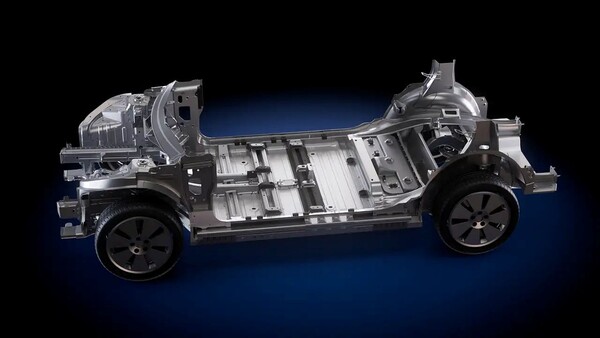
Next-generation electric vehicles will use lithium manganese-rich (LMR) batteries. GM said LMR batteries have 33 percent higher energy density than lithium iron phosphate (LFP) batteries while costing about the same. The new EV platform is designed to raise energy efficiency by 20 percent and cut battery capacity by 20 percent, while reducing vehicle weight by 15 percent and improving aerodynamics by 25 percent. It will also cut the number of parts in the drive unit and power electronics by 40 percent. The batteries are set to be produced at Ultium Cells' Spring Hill plant in Tennessee, a joint venture with LG Energy Solution.
The vehicle electronics architecture is also shifting to a centralised design. GM said it will integrate electronic control units dispersed throughout the vehicle into a central computing unit (CCU), boosting computing performance 40-fold versus existing systems and cutting wiring by 30 percent. The structure manages functions from propulsion and body control to perception and active safety features. It supports over-the-air software updates and more advanced autonomous driving technology. The central computing platform will be first applied to the Cadillac Escalade IQ in 2028 and then expanded to EVs and internal combustion engine vehicles.
GM plans to introduce a highway driving function for the Escalade IQ that does not require the driver to watch the road ahead or hold the steering wheel in the same year. It plans to expand the scope of application to large SUVs and pickup trucks. It also presented a future in which the vehicle performs everyday tasks such as grocery shopping or picking up laundry, and unveiled an autonomous driving concept called Concept Horizon that reconfigures the interior as a space for rest and work.
It will introduce PlantBrAIn at factories. By combining real-time production data with digital twin simulations, it helps identify potential errors and equipment bottlenecks in pressing, casting, welding, painting and assembly before actual production.
GM will also revamp its OnStar vehicle service around AI. The new OnStar AI assistant supports functions such as adjusting cabin temperature, opening the glove box and charge port, and checking tyre pressure and battery status through the voice command "Hey OnStar." It will be introduced first to the 2027 Cadillac Lyriq through an over-the-air update and then expanded to other models. GM said that unlike the existing Google Gemini-based voice assistant, it directly controls vehicle functions and performs features specialised for vehicle systems, such as interpreting warning lights and diagnosing batteries.
GM plans to integrate software and AI across vehicle development, production and operation to respond to the fast development pace and technology competition from Chinese companies. Still, it remains a challenge whether GM, which has been pushing the software shift, can prove the stability and completeness of its technology in actual vehicles.
 Seung-a Yoo
ysah@d-today.co.kr