
Advances in AI coding tools have lowered barriers to launching startups, but founders are facing deeper 고민 about how to survive in the market.
At the 'Nitro Track Day' event held on Thursday at Hashed Lounge in Seoul's Gangnam district, speakers shared how AI has reshaped the startup environment and the growth strategies startups are using to respond.
Lee Jae-hong (이재홍), CEO of Acros, which developed the AI search results analysis and optimisation service GPTO, pointed to capital strength as a new competitive edge. He met reporters after the event and said, "As AI lowers technical barriers to entry, it has now become a fight over sales and marketing." He said, "If product price competition spreads into a chicken game, it ultimately becomes a battle of capital strength."
Lee said AI now allows similar services to be developed in a short period, enabling latecomers to enter the market with lower prices. In response, Acros is pushing a strategy to switch monitoring and analysis functions that were previously paid services to free. It plans to withstand price competition and pre-empt the market based on funds raised and revenue secured.
He also cited network effects and proprietary accumulated data as strengths that are not easily copied, alongside capital strength. Acros is also seeking to widen the gap with latecomers by using the data and infrastructure it built by operating multiple websites directly.
Lim Wan-seop (임완섭), CEO of GGUI, which develops generative user interface technology, chose a strategy of raising technical barriers to entry. Lim said that when he launched his first startup in 2013, software development required substantial cost and time, but AI advances mean even more than 10 years of accumulated development capabilities no longer function as a barrier to entry as high as before.
Lim said, "I often felt that sales and marketing have become almost everything," but added that he is instead putting most of his time into research and development. He said, "I don't know how the outcome will be, but I am focusing on securing technology that is difficult for other companies to easily follow."
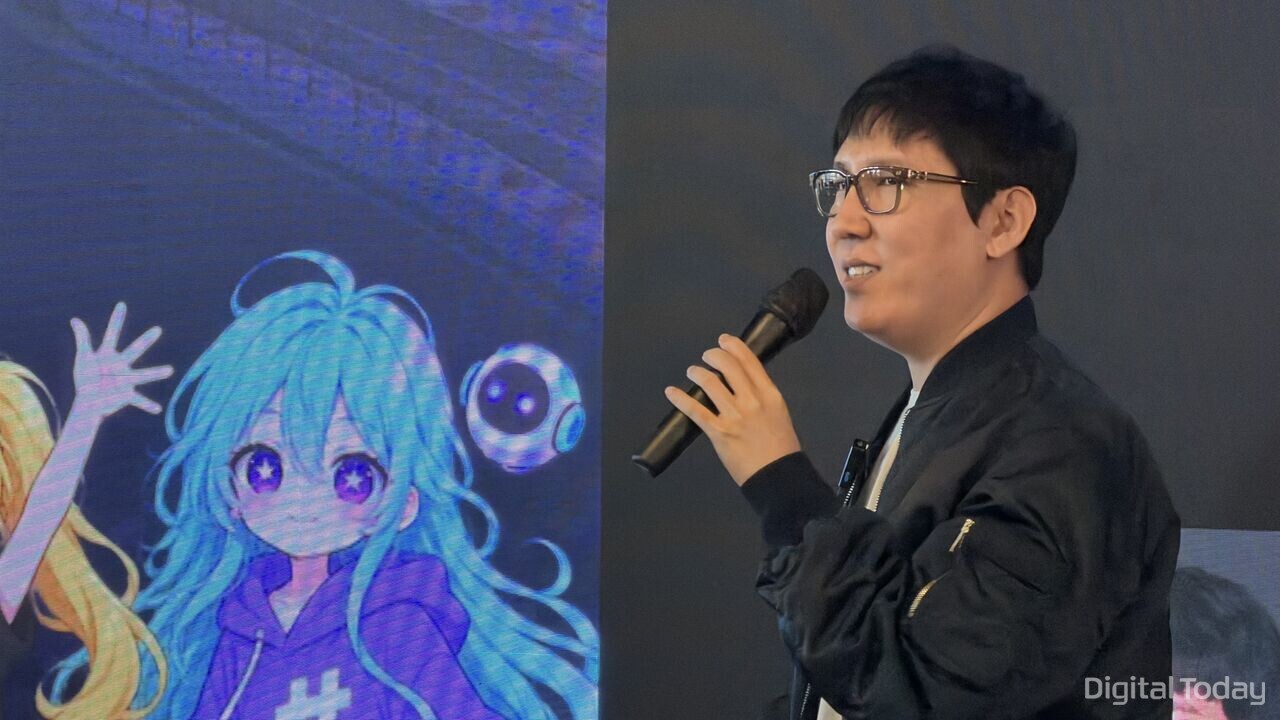
Park Jung-hwan (박정환), CEO who developed the AI role-playing chat service Elyn, stressed the importance of product differentiation. Park said of AI coding tools, "These days everyone uses them, and I don't think that can ever be an absolute competitive advantage." He said that since anyone can use the same tools, founders' ability to judge what problem to solve and what experience to provide users is important.
As competition among founders intensifies, investors are also strengthening support for commercialisation.
Han Sang-woo (한상우), head of communications at Hashed, said, "Making a product is OK. The problem is how to generate revenue after that and how to create a market."
Hashed is supporting startup teams' market entry by using overseas networks in Japan, the Arab world, Southeast Asia and North America. After revamping its startup support programme in April as 'Nitro by Hashed', it is expanding it into an always-on community to widen contact points with AI founders.
OpenAI has also moved to support the AI startup ecosystem. At the event, OpenAI's head of ecosystem strategy and partnerships for Asia-Pacific and Japan, Anna Muto, said, "Founders and developers are at the centre of what OpenAI does," as she introduced the company's startup support programme. OpenAI runs programmes including API credits and technical support, as well as market entry support using its venture capital partner network.
 Son Seul-gi
sageson@d-today.co.kr