
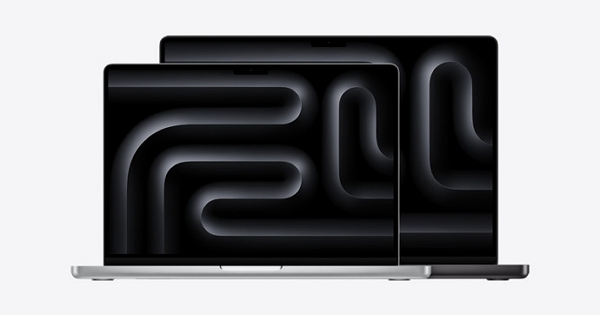
Apple could unveil a MacBook Pro with a touchscreen for the first time as soon as next week, a forecast said. Apple has long been negative about touching laptop screens directly, and attention is on whether it will change its established product philosophy.
TechRadar reported on Oct. 22 that Apple is known to have been reviewing a touchscreen MacBook Pro launch. If an actual product is unveiled, it could go beyond a simple feature addition and become a case of Apple changing a long-held principle on how MacBooks are used for input.
Apple has long avoided applying touchscreens to MacBooks. Instead, it has developed multi-touch trackpads while separating the roles of the laptop screen and input devices.
That direction was influenced by the product philosophy of co-founder Steve Jobs (스티브 잡스). Jobs expressed a negative view at a 2010 product launch event about operating an upright screen by hand. It can look effective in a short demonstration, but arms become fatigued with long use, he said. He pointed to the ergonomic limits of touchscreen laptops and explained that a horizontal input surface is more suitable for laptops.
Apple later focused on improving input methods around the keyboard and trackpad rather than adding touch features to the screen itself. The introduction of the Touch Bar on the MacBook Pro in 2016 can be seen as an extension of that approach. The Touch Bar placed a touch input area above the keyboard, but it was not a way of operating the screen directly.
Phil Schiller (필 실러), who was Apple's marketing chief at the time, also took a cautious stance on touchscreen MacBooks. In an interview with Steven Levy (스티븐 레비), he said Apple had reviewed the approach several times but concluded it was not the right direction for MacBooks.
Market conditions have changed. Laptop makers based on Windows 11 have steadily introduced 2-in-1 products that can fold screens or detach keyboards, expanding laptop experiences that use touch input. If Apple releases a touchscreen MacBook, it could be interpreted as a signal that it is newly acknowledging demand for a usage method it previously kept at a distance.
A change in leadership inside Apple is also cited as a factor. TechRadar mentioned the possibility that Apple's new chief executive, John Ternus (존 터너스), and executive chairman Tim Cook (팀 쿡) could have been involved in the decision. Given that product development typically takes years, the change may also have gone through long-term development and review rather than being driven only by an immediate judgment from a specific person.
Even so, it is hard to view the move solely as completely discarding Steve Jobs' philosophy. Jobs also left remarks to the effect that existing ideas and methods should be changed if needed. That means past judgments can be revisited as technology advances and user demands change.
The key is how Apple implements a touchscreen in a MacBook. It will be important whether it can reduce arm fatigue that occurs when directly touching the screen and link naturally with the existing keyboard and trackpad. That is because it must provide a new input method without merely adding touch functions, while maintaining the MacBook's distinct user experience.
Whether Apple will actually unveil a touchscreen MacBook Pro next week has not been confirmed. Still, if it becomes reality, it is expected to be a turning point that could bring changes to MacBook input methods and product design direction, beyond limited experiments such as the Touch Bar.
 Jinju Hong
hongjj@d-today.co.kr