
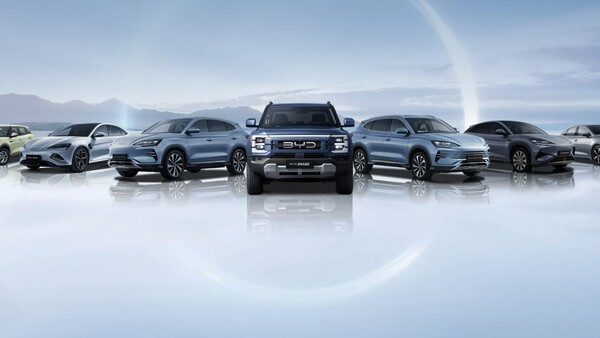
Production costs for Chinese-brand electric vehicles are on average 35 percent lower than comparable models in Europe.
InsideEV reported on Oct. 21 that consulting firm AlixPartners analysed production costs at about $20,000 for Chinese-brand EVs made in China, compared with about $31,000 for equivalent European-made EVs.
The assessment said the key is structural competitiveness rather than a simple subsidy issue. AlixPartners said China’s EV advantage is "not explained by financial support alone" and that cost gaps are created across corporate operating methods and manufacturing systems. The report said Chinese-brand EVs post production costs that are on average about 35 percent lower than comparable European models.
The first area cited was batteries. Europe was assessed as being unable to escape a high-cost structure because it is heavily dependent on outside sources for battery production and raw material procurement. Securing battery raw materials in Europe relies heavily on recycling, but current recycling capacity was presented as insufficient to sustainably support battery production. Europe’s energy prices are also higher than those in the United States and China, adding to production cost burdens.
AlixPartners presented expanded investment in battery plants as a solution. It said support and incentives for manufacturers are needed to keep encouraging the establishment and operation of battery production facilities, and that subsidies for energy costs should also be considered once plants are operating.
The report also cited Chinese companies’ fast development speed as a key driver of cost advantages. The "China speed" it described refers to shorter decision-making cycles than the industry norm, thinner management layers and a development approach centred on virtual testing. Fewer steps to reach key decision-makers and a concentration of real-world validation toward the end of development were described as boosting development speed.
The report said this structure appeared across EV development, including software-defined vehicles, platforms and ergonomic design. Chinese companies were assessed as being able to apply new technologies more nimbly and to move products to market faster than Western companies.
It added that speed did not always produce only benefits. The report also raised criticism that Chinese companies may not have been able to carry out sufficient testing and validation during the race to launch. The outlet cited an example of a software error in a Lynk & Co vehicle that could switch off lights while driving via a voice command, and said a fast launch strategy can also leave problems that could have been filtered out with longer testing.
The report also set out room for a European response. AlixPartners said Europe could narrow the gap by strengthening battery manufacturing capabilities and simplifying corporate structures. It warned, however, that tariffs alone would make it difficult to stop China’s competitive advantage. The report said "tariffs only buy time to catch up" and do not break Chinese companies’ underlying cost competitiveness.
Expanding local production of Chinese EVs could weaken some cost advantages. The report concluded, however, that structural advantages stemming from corporate operating methods, separate from domestic supply chains, are likely to remain. AlixPartners stressed that Western companies must fundamentally change how they run their businesses to maintain profitability and market position.
 Jinju Hong (홍진주)
hongjj@d-today.co.kr