
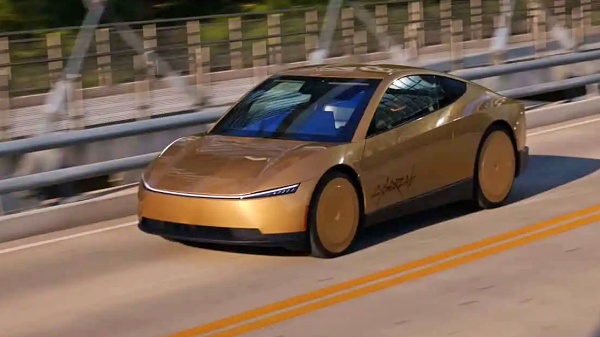
[Digital Today reporter Jinju Hong (홍진주)] Tesla said it will start delivering its autonomous-only Cybercab to individual customers by the end of 2026. Most of the initial production is expected to be deployed to a robotaxi service that Tesla owns and operates, meaning few units are likely to go to general consumers.
InsideEVs, an electric-vehicle media outlet, reported on Tuesday that Tesla disclosed the plan during its third-quarter earnings conference call.
Lars Moravy (라스 모라비), Tesla’s vice president of engineering, said in response to a question about the timing of customer deliveries, "We aim to get it to customers by the end of 2026." He added, "We are building vehicles on the Texas production line, but everything currently being produced is going into the internal robotaxi fleet."
The remarks show Tesla is positioning the Cybercab more as a transportation-as-a-service vehicle than simply a new car for private ownership. Elon Musk (일론 머스크), Tesla’s chief executive, also said on the call, "Cybercab will basically be offered as 'transportation as a service,'" adding, "Most Cybercabs will effectively be owned by Tesla and used for transportation as a service."
The comments are also likely to prompt a reassessment in the market among those expecting an expansion of private Cybercab sales. Musk has previously mentioned that the Cybercab price could be under $30,000. But the latest remarks indicate Tesla is prioritising its own robotaxi operating model over selling low-priced electric cars to individual customers.
Tesla has produced several hundred Cybercabs for development. It is offering a paid ride service in Austin, Texas, and plans to expand to Dallas soon. The Cybercab is also under investigation by the U.S. federal government over operating without equipment required under some federal standards.
In particular, the absence of a steering wheel in the Cybercab is making the nature of a privately owned model even less clear. It is still unclear whether individuals would be able to drive the vehicle themselves even if they own it, and how it would be used. Tesla appears to be placing more weight on operating its own service than on addressing that issue.
Given Musk has long emphasised that individuals could own vehicles such as the Model 3 and Model Y and put them into a car-sharing network to generate income, the shift shows Tesla’s robotaxi strategy is moving from encouraging wider private ownership to direct operation. On that point, the outlet said Model 3 and Model Y could still leave room for private owners to participate in robotaxi operations if full self-driving is sufficiently implemented in the future, but noted the Cybercab may not have a large share of private sales from the outset.
Ultimately, Tesla’s end-of-year delivery plan signals the start of commercialisation of the Cybercab, but in the early stage the key is expected to be expanding its own robotaxi network rather than consumer sales. Even if deliveries to individual customers begin, volumes are likely to remain effectively limited.
 Jinju Hong
hongjj@d-today.co.kr