
[Digital Today reporter Jinju Hong (홍진주)] OpenAI added virtual clothing try-on and product-saving features to ChatGPT, expanding its shopping assistance tools. The feature will be rolled out sequentially to users worldwide.
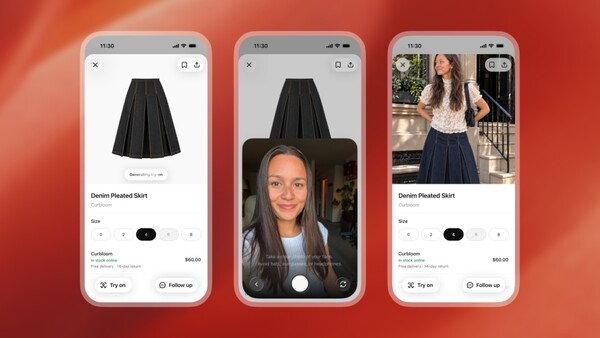
TechCrunch reported on Oct. 1 that the key is the ability to check clothes and accessories within ChatGPT as if trying them on directly. Users can upload a selfie or a full-body photo to see how specific clothing or accessories would look on them. A new “try on” button will appear on the shopping results screen. Users can also upload only a product photo, such as an image captured from a webpage, and request an image of themselves wearing the item.
The newly introduced Favorites feature lets users save products found while shopping to an in-app library to view later. OpenAI said saved products are stored together with virtual try-on images. It is seen as an attempt to expand ChatGPT from a simple search aid into a shopping tool that supports comparison, saving and revisiting.
The update uses the image model “ChatGPT Image 2.5” unveiled recently. OpenAI said the model delivers more natural lighting and richer textures, follows editing instructions more reliably and reduces delays in image generation. It is effectively putting image-quality improvements front and center for features like virtual try-on, where natural-looking output matters.
ChatGPT’s range of shopping uses has also broadened. Users can describe the style they want and ask it to find a combination of products to complete that mood. They can also upload a photo of clothing worn by a celebrity and ask it to find similar products that are actually available for purchase. The setup aims to bring the flow of searching for fashion inspiration and immediately finding purchase candidates into ChatGPT.
OpenAI has already had trial and error in shopping. An earlier instant payment feature changed direction after falling short of expectations. More recently, agent-style AI startup Instinct tried pushing product recommendations to users, but some users took it as closer to advertising than helpful suggestions. In this situation, OpenAI appears to have focused on a flow in which users explore and save items themselves, rather than putting recommendations front and center.
The competitive landscape is also clear. The feature to find products based on celebrity outfits overlaps with areas where Pinterest and Google have shown strength in recent years as major gateways for fashion discovery and purchase conversion. Still, it remains unclear whether ChatGPT will become users’ first choice for these activities. Google already introduced a virtual try-on feature last year.
As a result, the expansion of ChatGPT’s shopping functions is expected to become a test of how far conversational AI can push beyond information search into product discovery and purchase preparation. With OpenAI placing more weight this time on improving the browsing experience rather than payments, actual user response is likely to influence the future direction of shopping-feature expansion.
 Jinju Hong
hongjj@d-today.co.kr
Jinju Hong
hongjj@d-today.co.kr