
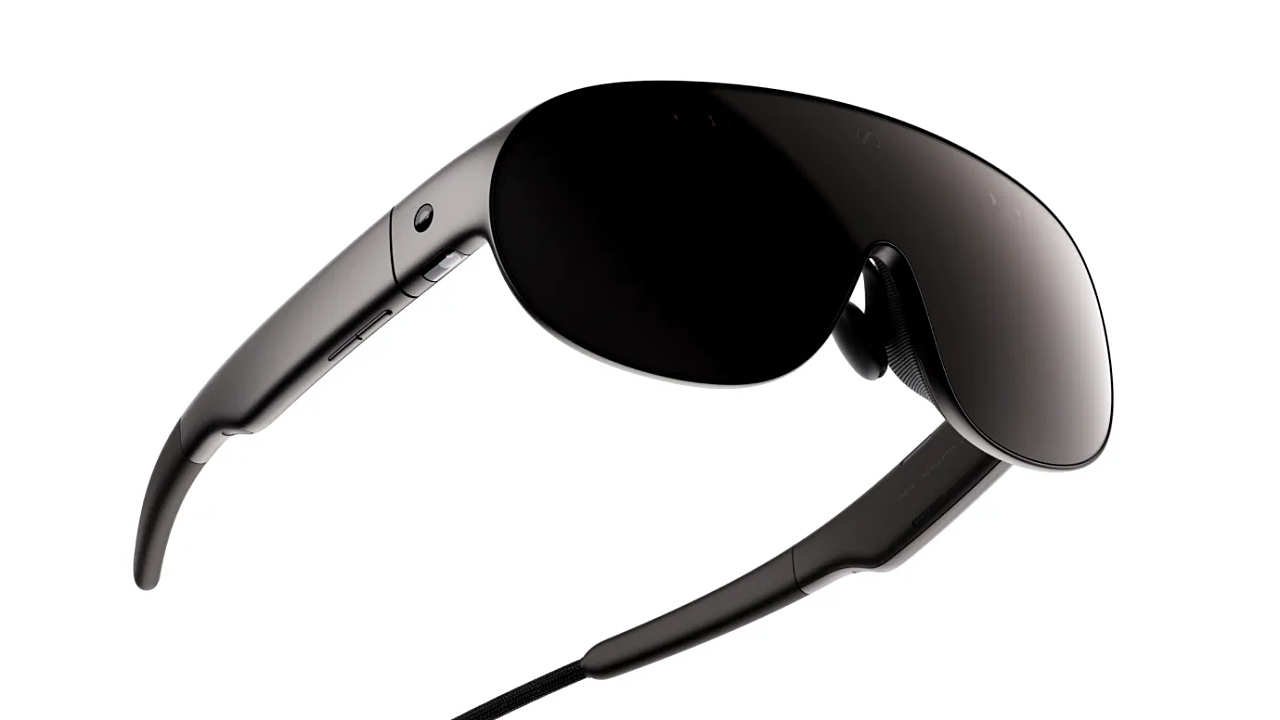
Meta’s glasses-style VR device, Meta VR Glasses, is drawing attention as an alternative that could reduce the limits of existing goggle-type VR headsets and transparent AR glasses. On Oct. 1, local time, tech outlet The Verge rated it as close to a first design that could persuade ordinary users to embrace VR again.
The device is neither an opaque VR headset nor transparent AR glasses. It takes a glasses form, putting a real-time video-based passthrough screen in the centre while allowing users to see the surrounding outside area with the naked eye. The structure means users do not completely lose peripheral vision even with games or virtual screens displayed.
It weighs about 100 grams, roughly five times lighter than a typical headset. Instead of tightening and securing around the head, it hooks over the ears and sits in front of the eyes, reducing a sense of enclosure and the burden of wearing it. It costs $1,299, lower than Apple Vision Pro’s $3,700, but the key is seen as a change in the wearing experience rather than the price.
Field of view is also presented as a differentiator. Meta VR Glasses supports a 70 degree by 66 degree field of view. Compared with transparent display glasses that generally stay around 60 degrees horizontally and 40 degrees vertically, the perceived difference is large. Inside the lenses, the real and virtual viewing ranges match, so there is less of a feeling that virtual objects abruptly cut off at the edges of the screen. Resolution is 37 ppd, making text easier to read.
Still, the screen does not cover the entire view in front of the eyes, leaving it short of fully immersive VR. Even so, an assessment said the hand-tracking range extends beyond the field of view, so it did not feel like tunnel vision. Meta called the product a “new era of virtual reality,” and wearables vice president Alex Himel (알렉스 하이멜) said, “The future of everything we do is a pair of augmented reality glasses.”
If Meta VR Glasses delivers results, the industry’s VR device designs could also change. Another view is that Meta, too, could put more weight on glasses-type devices than on goggle-type headsets going forward.
 Hyunwoo Choo
cookinpapa@d-today.co.kr
Hyunwoo Choo
cookinpapa@d-today.co.kr