
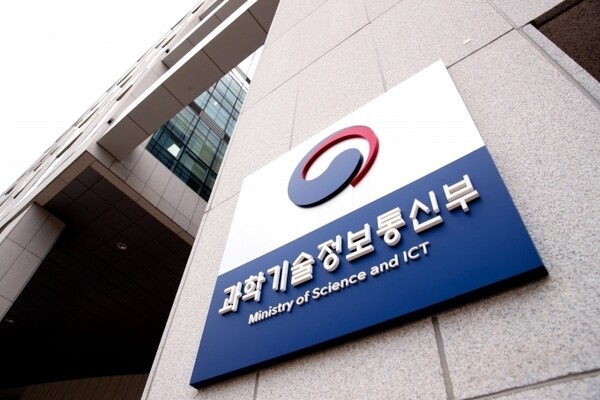
South Korea's Ministry of Science and ICT is pooling industry, academia and research capabilities to strengthen its response to rare earth supply chains that are highly dependent on China.
The ministry launched the "K-Moonshot Rare Earth Industry-Academia-Research Council" on Wednesday at the Koreana Hotel in Seoul.
The ministry is pursuing the K-Moonshot programme to solve national challenges by combining AI with science and technology. Among its 12 missions, the materials goal is set as the "development of permanent magnets with the world's best performance that substitute for, reduce and recycle rare earths".
Rare earths such as neodymium, dysprosium and terbium are used in high-performance permanent magnets, a core component of motors for advanced industries including electric vehicles, robots and defence. Rare-earth permanent magnets have magnetic performance more than 10 times higher than general magnets and are characterised by maintaining performance even at high temperatures.
The K-Moonshot rare earth programme will be 추진 from 2027 with the Korea Institute of Materials Science, the Korea Institute of Geoscience and Mineral Resources and the Korea Institute of Industrial Technology playing central roles. The ministry plans to develop permanent magnet manufacturing process technology that does not use heavy rare earths and significantly reduces the use of light rare earths. It will also secure technology to recover rare earths from waste permanent magnets in an environmentally friendly way.
In the first phase from 2027 to 2029, the programme will focus on securing independent core technologies. In the second phase from 2030 to 2033, it will pursue technology advancement and field demonstrations at industrial sites. AI will be used throughout the research and development process. AI will be applied to speed up R&D, including identifying candidate materials to substitute for and reduce rare earths, designing particle microstructures, and exploring environmentally friendly solvents and electrodes.
About 40 people will take part in the industry-academia-research council launched on Wednesday, including permanent magnet demand companies, materials and recycling companies, universities, government-funded science and technology research institutes and researchers from related academic societies. The council will share technology and industry trends related to rare earths, with the materials programme director for K-Moonshot serving as chair. It will identify companies' R&D needs and firms for technology demonstrations, and discuss tasks to improve related policies and systems.
Kim Seong-su (김성수), head of the ministry's Office of Research and Development Policy, said South Korea imports most of its rare earths and permanent magnets from China and is facing a supply-chain crisis in advanced industries that is directly linked to economic security. He said the ministry would support efforts to secure independent core technologies for substituting, reducing and recycling rare earths by leveraging accumulated domestic research capabilities and an industrial base for field demonstrations.
 Jin-ho Lee
jhlee26@d-today.co.kr
Jin-ho Lee
jhlee26@d-today.co.kr