
MAUI, Hawaii, U.S. - Qualcomm presented agentic AI devices as a basis for demand for 6G connectivity. It said inference is continually exchanged between on-device and cloud systems by an agent inside the device, creating connectivity requirements different from smartphones that 6G would meet. Qualcomm is keeping its plan to commercialise 6G in 2029 and is working with carriers and device makers (OEMs) on preparations that include a technology demonstration at the 2028 Los Angeles Olympics.
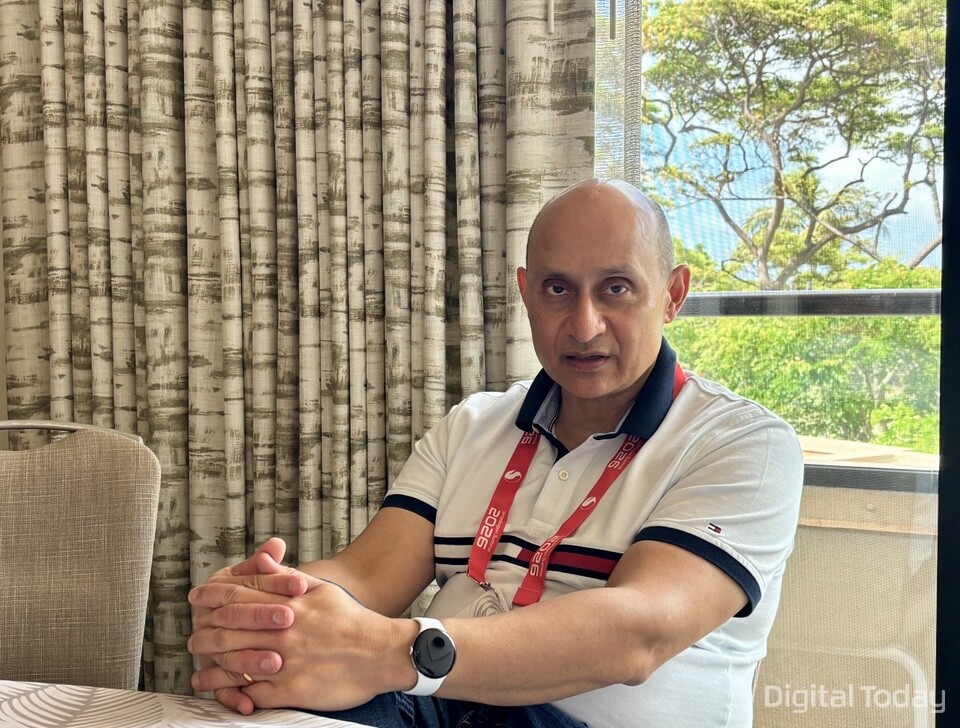
Durga Malladi (두르가 말라디), Qualcomm senior vice president and head of technology planning, edge solutions and the data centre division, said at a Snapdragon Summit 2026 media roundtable in Maui on Sept. 22 local time that agentic AI devices continuously exchange inference between work running on the device and work running in data centres. "Connectivity requirements are very different," he said. He defined agentic AI devices as devices in which an agent inside the device handles tasks on behalf of the user.
Qualcomm said it saw demand from newly emerging device makers to connect devices and the cloud together for processing. Malladi cited Alibaba as an example and said a company that had been a cloud provider and not an OEM had now become an OEM. He said these new OEMs focus less on peak data rates and more on maintaining always-on cloud connectivity while performing inference on the device.
Agentic AI devices are being launched even with 5G alone. The difference with 6G is functionality. Malladi said connectivity requirements will diverge significantly from smartphones or fixed wireless access as agentic AI devices evolve, and that a new category of agentic AI devices will begin to require 6G capabilities at that point.
Malladi forecast that agentic AI devices unveiled at the summit, including laptops, smartphones and smart glasses, would develop into 6G devices in about three years. He said when 5G launched in 2019 the focus was on very high data rates, while 6G is more focused on what use cases become possible.
Qualcomm is preparing 6G around three pillars: connectivity, wide-area sensing and network high-performance computing. He said it was the structure Qualcomm presented earlier this year at the Mobile World Congress (MWC) as a "6G foundation axis." He also stressed that the high-performance computing segment has moved from the vision stage to the stage of planning commercial products.
Qualcomm plans to apply some CPU and AI accelerator products from its data centre business, which it entered last year, to telecommunications networks as well. It is testing wide-area sensing at Qualcomm's prototype testbed in San Diego and at overseas sites with key partners. He said the direction is to build a world model of the network using sensing data and use it for network automation.
2029 commercialisation timeline maintained... technology demonstration at LA Olympics
Malladi said Qualcomm has also secured partner companies that promised to participate in commercialisation in 2029 after its MWC presentation. He said about 60 partners took part in Qualcomm's 6G cooperation announcement at MWC. Malladi said all three South Korean mobile carriers participated in the MWC announcement and that their shared view was that much more investment is needed in AI for networks. He did not disclose specific cooperation details with South Korea on the day. Malladi said he visited South Korea in July to discuss with key domestic partners and that he would announce additional details soon.
Qualcomm is setting its schedule by working backward from the 2029 commercialisation point. "6G commercialisation in 2029 is Qualcomm's firm commitment," Malladi said. "We are proceeding as planned," he said. The timeline calls for early research and development and prototype testing in 2027, pre-commercial devices and testing in 2028, and commercialisation in 2029.
Qualcomm is also preparing a 6G technology demonstration with partners at the 2028 Los Angeles Olympics, which will be held before commercialisation. Malladi said the Olympic demonstration would be a technology demo at a stage prior to commercialisation. He said additional news on 6G partners would be disclosed at MWC 2027.
 Daegeon Seok
d2dg@d-today.co.kr
Daegeon Seok
d2dg@d-today.co.kr