
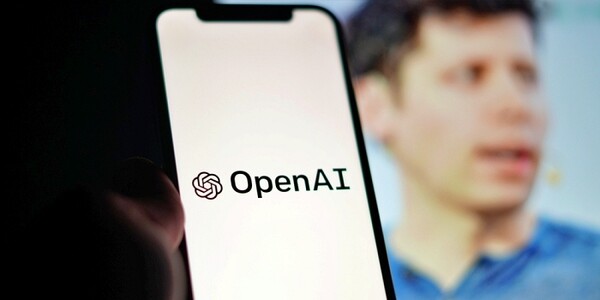
OpenAI has offered robot engineers salaries of up to $500,000 a year, or about 700 million won, as it expands its robotics organisation.
Business Insider reported on Sept. 18 that OpenAI currently has 27 robotics jobs listed on its careers page. The disclosed base pay, excluding stock compensation, ranges from $177,000 a year, or about 245 million won, to $500,000.
The hiring has more than doubled from 11 roles on May 1. The recruitment is not limited to software. OpenAI is seeking staff across robotics, including hardware design, data collection, prototyping, testing, firmware, machine learning and legal. Roles include an actuation design engineer who designs motors and mechanisms that move robot joints, and a lab technician who develops, builds, tests and improves robot systems.
The postings show OpenAI is not only developing robot control software but also building in-house machine-building capabilities. After reviewing the 27 postings, Guy Hoffman (가이 호프먼), a professor of mechanical and aerospace engineering at Cornell University, said OpenAI appears to be forming a "custom robot design team".
A role overseeing data collection facilities, in particular, shows where the bottleneck lies in OpenAI's robotics strategy. Unlike large language models, which can learn from vast amounts of internet data, robots need separate examples of people and machines interacting in the physical world. For this reason, robotics companies often have to create their own data or buy it from external suppliers.
The highest-paid position is a machine learning engineer responsible for a distributed data system. The job handles infrastructure for processing and moving robot training data, with a base-pay cap set at $500,000. OpenAI did not provide a separate position in response to related inquiries.
The job postings also include some long-term plans. One posting says the robotics team is focused on "unlocking general-purpose robotics and progressing toward AGI-level intelligence". Another sets out a long-term vision of "everyone having a personal robot that takes over the tasks they need".
Sam Altman (샘 알트먼), OpenAI's chief executive officer, has also mentioned the robotics plan more directly. He said on a podcast earlier this month, "We will definitely make humanoids" and "we will also make other forms of robots". He also said "data centres could be an initial use case" and "in the long term, I think everyone should have a personal robot someday".
The robotics team is led by Aditya Ramesh, who took part in developing the Dall-E image generator and Sora. He has also worked on world simulation models that mimic how the physical world operates.
OpenAI previously ran a robot-hand project that solved Rubik's Cubes, but shut the organisation in 2020. Its renewed turn toward robotics coincides with a trend of large funding inflows into so-called physical AI, which puts AI into machines that operate in the real world. OpenAI is known to be teaching a robot arm to do household tasks as part of a humanoid project earlier this year.
If OpenAI releases its own humanoid, the competitive landscape could change. Tesla is developing the humanoid "Optimus", and Figure AI is also cited as a company that has raised large-scale funding. OpenAI's startup fund is also an investor in Figure AI, and OpenAI previously worked with Figure AI on cooperation for AI models for robots.
Even so, it is difficult to pin down the final product form based on job postings alone. Hoffman said mentions of laser rangefinders and batteries vaguely suggest a mobile robot without a tether, but said it is unclear whether it will be wheeled or legged. He also pointed to the limited number of openings related to electronics and said a configuration centred on commercial components such as cameras, microphones and laser rangefinders may take priority over expanding general-purpose sensors.
The core of the hiring expansion is that OpenAI is lifting robotics from an experimental stage to a stage of developing independent products. As it steps up an organisation that embraces hardware, data and software together, OpenAI's humanoid strategy is also entering a more concrete competitive phase.
 Jinju Hong
hongjj@d-today.co.kr
Jinju Hong
hongjj@d-today.co.kr