
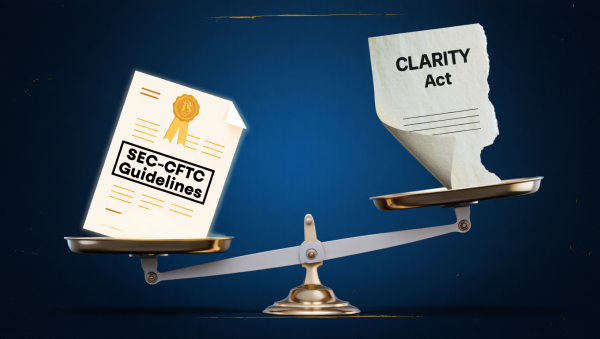
The “Clarity” bill, cited as a key U.S. cryptocurrency legislative initiative, failed to clear a cloture vote this week. Coinbase raised the possibility that future policy leadership could move from Congress to regulators.
Bitcoin Magazine reported on Sept. 20 that Coinbase Chief Policy Officer (CPO) Faryar Shirzad (파리야르 쉬르자드) pointed to the U.S. election calendar as a reason the Clarity bill’s legislative process stalled. He also said resistance built up in the process as major banks mounted a large-scale campaign.
Shirzad assessed that Congress’ legislative momentum weakened as the Clarity bill fell into the latter part of the election cycle. He cited major banks running a campaign worth about $200 million and said it became a significant burden during the bill’s passage process.
Attention is turning to which path U.S. cryptocurrency policy will take after the bill failed to advance. Shirzad noted that Congress has already had one chance to legislate and suggested future policy changes could move to the Securities and Exchange Commission (SEC), the Commodity Futures Trading Commission (CFTC) and bank regulators.
He also presented a view that the role of regulators could become more important under SEC Chairman Paul Atkins. If comprehensive legislation is delayed, the cryptocurrency industry could be more directly affected by regulators’ interpretations and enforcement direction.
Coinbase did not view the legislative delay as a broader loss of momentum in cryptocurrency policy. Shirzad presented a “three-pillar policy strategy” spanning legislation, regulation and international coordination. He said that even if the legislative process in Congress slows, there remains room to advance policy through regulators and international policy channels.
This shows that U.S. cryptocurrency institutionalisation is not determined by congressional legislation alone. Even if Congress fails to pass a comprehensive market structure bill, the SEC and CFTC’s regulatory direction, bank regulators’ policy judgments and international coordination with other countries can affect the industry environment.
As a result, the industry’s focus could shift from whether Congress will push the bill again to regulators’ follow-up moves. Key variables include what regulatory standards the SEC and CFTC apply to crypto assets and related companies, and how the relationship between the banking sector and the digital asset industry changes.
The outlet did not mention a detailed review schedule or separate voting plan for a strategic bitcoin reserve bill. Coinbase’s message focused on continuing its response in regulation and international policy even as the Clarity bill’s legislative progress is delayed.
Ultimately, the direction of U.S. cryptocurrency policy is expected to depend for now not only on Congress’ legislative schedule but also on follow-up measures from the SEC, the CFTC and bank regulators.
 Jinju Hong
hongjj@d-today.co.kr
Jinju Hong
hongjj@d-today.co.kr