
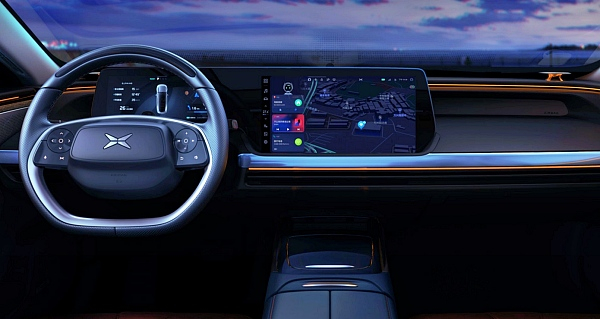
[DigitalToday reporter Hyunwoo Choo (추현우)] Chinese electric vehicle maker Xpeng is moving to expand a licensing business that sells its autonomous driving and smart cockpit technology to external customers. On Sept. 18 (local time), EV outlet Electrek reported that Xpeng is pushing to supply technology to automakers, parts suppliers and software companies, beyond its existing cooperation with Volkswagen.
Xpeng set up a dedicated team for strategic commercialisation about 6 months ago and began securing contracts. Supply items include a vehicle electrical and electronic architecture, smart cockpit, its in-house Turing AI chip, advanced driver-assistance systems and autonomous driving software. Robotaxi and humanoid robot technology is also being offered. New customers were not disclosed, but it was reported that interested companies have already made contact.
Cooperation with Volkswagen is the benchmark for the strategy. Volkswagen invested about $700 million in Xpeng in 2023 to acquire a 4.99 percent stake. Since then, it has used Xpeng software and electronics technology to develop EVs for the China market. The ID.UNYX 08 electric sports utility vehicle co-developed by the two companies entered mass production in March 2026.
Performance has also shifted. Xpeng's second-quarter 2026 service revenue rose 93.9 percent from a year earlier to about $400 million. Shares rose about 3 percent after related reports, but are down about 47 percent since the start of the year.
The move resembles a strategy Tesla has pursued for years. Elon Musk (일론 머스크) has said since 2021 that Tesla could license its FSD to other automakers, but there have been no cases that led to actual contracts. Musk wrote on X last November that he offered a Tesla FSD licence but it was not wanted. Incumbent automakers wanted Tesla to shoulder liability in the event of an accident, and Musk saw that as unacceptable.
The technology approach shows similarities and differences. Xpeng chose to scale up its data and train end-to-end neural networks to drive vehicles mainly with cameras. It retained radar and ultrasonic sensors. These sensors operate as a redundant safety system separated from the driving AI, serving as a safety net for automatic emergency braking and steering assistance.
 Hyunwoo Choo
cookinpapa@d-today.co.kr
Hyunwoo Choo
cookinpapa@d-today.co.kr