
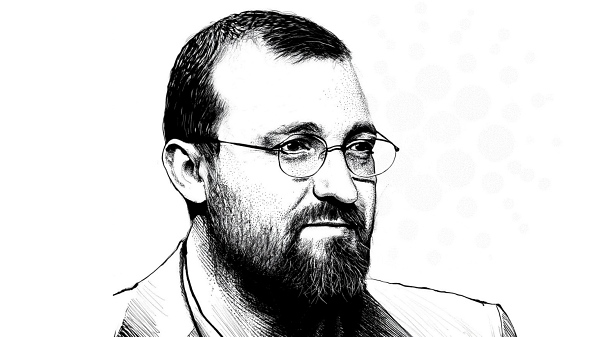
Cardano founder Charles Hoskinson (찰스 호스킨슨) said ADA and XRP should be classified as commodities rather than securities.
On Sept. 17, blockchain media outlet The Crypto Basic reported that Hoskinson pointed to problems in how digital assets are classified as a reason the Clarity Act failed to advance in the U.S. Senate.
He said the fundamental problem was an approach that broadly groups various digital assets as commodities and puts the U.S. Commodity Futures Trading Commission (CFTC) at the centre of regulation. Securities and commodities have fundamentally different characteristics, he argued, and should not be subject to the same regulatory framework. He stressed that the U.S. Securities and Exchange Commission (SEC) has broad authority and staffing for disclosures and market surveillance, while the CFTC is a principles-based commodities regulator.
Hoskinson did not reject commodities regulation for cryptocurrencies itself. He said the legislative process should first clearly define which digital assets are actually commodities and which should be classified as separate digital securities. He cited bitcoin, Cardano and XRP as assets that qualify as "true commodities."
The remarks also tie in with changes in U.S. regulatory interpretation. The SEC and the CFTC issued a joint interpretation earlier this year and set out standards to classify each cryptocurrency into categories such as digital commodities, digital securities and stablecoins. In that interpretation, Cardano and XRP were included in the digital commodities category.
The U.S. District Court for the Southern District of New York ruled in July 2023 that XRP itself should be distinguished from Ripple's sales methods. It did not view XRP itself as inherently a security, but said some sales to institutions amounted to securities transactions. By contrast, it did not view Ripple's programmed sales in the secondary market as unregistered securities sales under the premises of the case at the time. The ruling effectively confirmed that an asset itself and individual transactions surrounding it can be viewed differently.
Cardano was also included in a list of assets the SEC took issue with in past enforcement actions against major cryptocurrency exchanges. But the regulatory environment later began to change in some ways. The SEC dropped its civil enforcement lawsuit against Coinbase in February 2025, and then in March 2026 presented a broader framework that distinguishes digital commodities from other categories of cryptocurrencies.
Hoskinson also stressed the limits of U.S.-centric regulation. Because digital assets operate across borders, he said a regulatory decision in one country affects participants and operators in other regions. He argued that the United States should pursue a mutual recognition system with other jurisdictions so different regulatory frameworks can be linked.
He said his remarks go beyond claims about the individual nature of ADA and XRP. They are leading to calls for the United States to first clarify the boundary between digital commodities and digital securities when designing crypto regulation, and then connect that work to cross-border regulatory coordination.
Clarity Act https://t.co/oskhEUmGUo
 Yoonseo Lee
yslee@d-today.co.kr
Yoonseo Lee
yslee@d-today.co.kr