
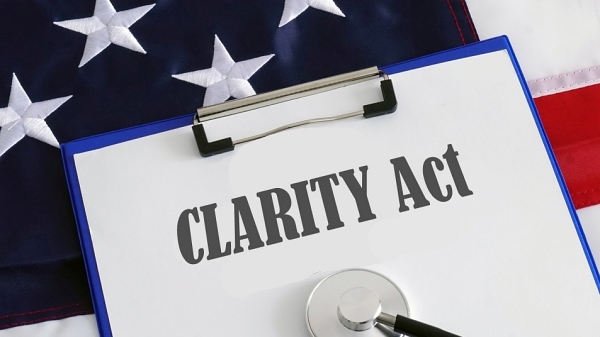
The Clarity Act, a U.S. digital asset market structure bill, failed in a Senate cloture vote, but a procedural path for a revote remains. With congressional scheduling tightening ahead of the midterm elections and Democrats continuing to press additional demands, room to advance the bill is narrowing.
Cointelegraph, a blockchain outlet, reported on Sept. 17 that the Senate on Sept. 15 failed to move the Clarity Act forward in a vote to end debate, with 49 in favor and 50 against. The cloture vote is not a final vote on the bill. It requires 60 votes to end debate and move to the next step.
A key variable was a last-minute vote change by Republican Senator Thom Tillis (톰 틸리스). Tillis initially voted in favor but later switched to oppose. The move was procedural rather than opposition to the bill itself, intended to preserve the option to file a motion to reconsider. The Clarity Act was therefore not immediately discarded, and a new cloture vote remains possible.
Time is limited. The Senate is set to recess from Oct. 2 and return after the midterm elections. The House is already in recess for the campaign period, making it harder to move the bill through both chambers by year-end. Democratic Representative Shri Thanedar (슈리 타네다르), who supported the Clarity Act in the House in July 2025, said the schedule is a "major barrier" to reaching a deal.
There is precedent for trying again. The GENIUS stablecoin bill failed its first cloture vote in May 2025 by 48 to 49, but passed a second cloture vote 11 days later by 66 to 32 and cleared the Senate the following month. The Clarity Act could also be pursued again in a lame-duck session after the election, but there is currently no agreed package ready for immediate action.
Political issues also remain. None of the 49 senators who voted for cloture on the Clarity Act were Democrats. Still, there were signals Democrats had not abandoned the bill. The next day, 7 Democratic senators said they would keep working to pass the Clarity Act on a bipartisan basis.
The dispute is less about whether Congress needs to establish cryptocurrency regulation than whether the current bill is sufficient to secure bipartisan support. Republicans incorporated 126 substantive amendments sought by Democrats ahead of the vote. They included tighter limits on public officials seeking profit through crypto businesses and provisions allowing state attorneys general to enforce some ethics rules.
Democrats, however, say stronger ethics safeguards are needed in connection with U.S. President Donald Trump's cryptocurrency interests. Thanedar said more measures are needed to restrict a president from using authority for private gain. He also cited Trump's disclosure in his annual financial filing of at least $1.4 billion in cryptocurrency-related income for 2025, saying guardrails are needed to hold the president accountable and protect the digital asset market.
Additional negotiating items remain. Kyle Chassé (카일 샤세), founder of crypto investment firm MV Global, said proposals such as capping stablecoin rewards or limiting returns, strengthening anti-illicit-finance measures and expanding state enforcement authority could be conditions for securing support from some Democrats and the banking sector. He said provisions on self-custody and developer protections are areas the industry should not easily concede. Negotiations have also continued over how far to protect non-custodial developers from financial regulation and anti-money laundering obligations.
Even if the Clarity Act remains blocked in Congress, that does not mean U.S. efforts to refine cryptocurrency regulation will stop. Michael Saylor (마이클 세일러), chairman of Strategy's board, also pointed out that the U.S. Securities and Exchange Commission, the Commodity Futures Trading Commission and the U.S. Treasury Department can continue regulatory work under existing law. Such executive-branch and agency actions, however, can be changed by future administrations, unlike legislation.
The Clarity Act could still return to the Senate procedurally, but it would need to secure the 11 missing votes to be handled within the year. How much it can incorporate Democrats' ethics provisions and additional amendments is expected to be the key variable in future talks.
 Seung-a Yoo
ysah@d-today.co.kr
Seung-a Yoo
ysah@d-today.co.kr