
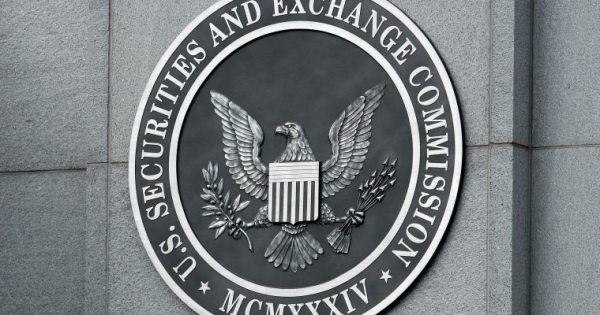
The U.S. Securities and Exchange Commission has opened a regulatory pathway to trade U.S.-listed stocks in token form. CNBC reported on Sept. 17 that trading platforms and liquidity providers meeting certain conditions will be able to handle tokenised stocks.
The move is based on the SEC's "innovation exemption". It is not a formal rule, but it will apply for 5 years. The SEC plans to develop standards needed for final rules during market operations.
The investment industry is debating 2 requirements.
One is that token holders should have the same rights as existing shareholders. The other is that companies should be able to object to their securities being issued as tokens.
The move came 2 days after the Clarity Act failed to pass in the Senate. The Clarity Act has been seen as the most important bill on crypto market structure and includes provisions to clearly define how digital assets, including tokenised securities, are classified and regulated.
After the bill fell through, the SEC moved to set regulatory boundaries directly using its existing authority, CNBC reported.
SEC Chairman Paul Atkins said, "The innovation exemption was designed to address problems that have prevented responsible innovation from taking root in the United States, while maintaining investor protection and market integrity standards."
Tokenisation refers to the process of issuing various forms of value, such as listed shares or real assets, in digital form on a blockchain network.
Coinbase, Robinhood, Gemini and Kraken exchange, under Payward, have already launched tokenised stock products in offshore markets. They have not yet started services for U.S. customers.
If tokenisation spreads, the way securities are traded and settled could change. Trading could become possible 24 hours a day, and tokenised assets could also be linked to blockchain-based financial infrastructure.
There are also side effects. Critics say volatility can increase when trading volume is low, exposing investors to the risk of sharp price swings. CNBC reported that the innovation exemption includes provisions to limit trading volume to reduce such risks and abrupt fluctuations.
 Chi-gyu Hwang
delight@d-today.co.kr
Chi-gyu Hwang
delight@d-today.co.kr