
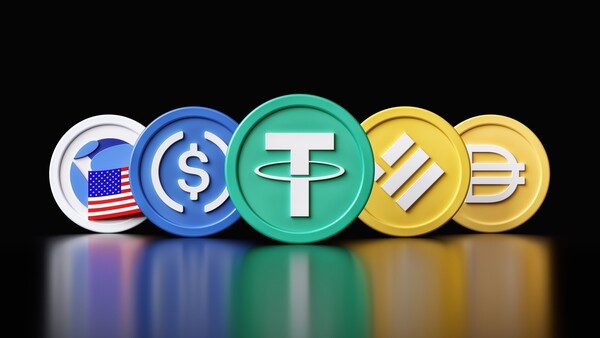
A view has emerged that the spread of dollar-pegged stablecoins could simultaneously increase the U.S. dollar's global dominance and demand for U.S. Treasuries.
On Sept. 15 local time, blockchain outlet Cointelegraph reported that Bank of England Financial Policy Committee member Carolyn Wilkins said the expansion of the stablecoin market could affect the international monetary order and the government bond market beyond the crypto market.
In a speech at Queen's University Belfast, Wilkins said dollar-denominated stablecoins can make cross-border payments easier, broaden access to dollar-linked assets outside the United States and increase demand for U.S. Treasuries held as reserve assets. She explained that dollar-based stablecoins account for 98 percent of total stablecoin value, giving the dollar a significant first-mover advantage.
Large stablecoin issuers have already emerged as major buyers of U.S. government debt. Data cited by Wilkins showed Tether's USDt and Circle's USDC held about $150 billion in short-term U.S. Treasuries as of end-2025 and bought about $33 billion worth during 2025.
A risk factor cited was that issuers may have to sell short-term Treasuries if mass redemptions occur. Wilkins warned such selling could add to volatility in already unsettled markets.
The market size continues to grow. Stablecoins in circulation have topped $300 billion, and 98 percent of them are dollar-based. Wilkins viewed this concentration as a backdrop that broadens the dollar's influence. She judged that as stablecoins effectively function as digital dollar infrastructure, a structure is being strengthened that ties international payments and demand for reserve assets around the United States.
British regulators have been speeding up related institutional work this year. The Financial Conduct Authority (FCA) began testing potential stablecoin issuers through a separate regulatory sandbox, and in June it finalised rules for stablecoin issuance in the UK.
The Bank of England is also conducting digital currency experiments in parallel. It recently tested whether stablecoins and a virtual digital pound could work together in cross-border trade payments. Against this backdrop, the Bank of England is showing a trend of adjusting its stance on stablecoins to be somewhat more flexible than before. The industry had previously criticised the Bank of England's proposed regulations as potentially stifling innovation.
The remarks came as views spread that stablecoins are a new axis for payment infrastructure and demand for government bonds. They also again highlight that the reserve-asset structure and redemption shocks could spill over into traditional financial markets. Going forward, the pace of expansion in dollar-based stablecoins and what institutional balance regulators choose between monetary sovereignty and market stability are expected to emerge as key variables.
 Yoonseo Lee
yslee@d-today.co.kr
Yoonseo Lee
yslee@d-today.co.kr