
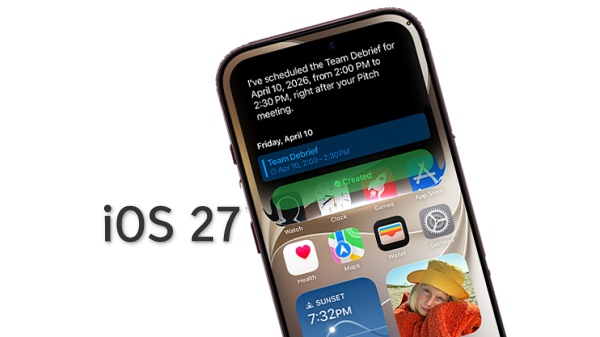
iPhones updated to iOS 27 may consume battery power faster than usual and run hotter, but this is reported to be temporary.
IT outlet NineToFiveMac reported on Sept. 15 that iPhones perform background tasks for a while right after a major iOS 27 update, which can increase both power consumption and heat.
The phenomenon is linked to post-processing after the update rather than a defect in iOS 27 itself. Once the new iOS version is installed, devices continue various internal cleanup tasks, and the bigger the update, the longer this process can take. The outlet explained that some tasks run in the background for a period each time users upgrade to a new iOS version.
The problem is that this work pushes up processor usage. NineToFiveMac noted that such background processes "make the iPhone hotter than usual and use much more battery power." Users can notice higher device temperatures or a faster drop in remaining battery even in normal use right after updating.
On iOS 27, the impact can be bigger than in previous years because devices must reindex the entire device for Siri AI use. The outlet explained that iOS 27 has a bigger impact than usual because of the need for full-device reindexing for Siri AI. The reindexing can continue for several days.
The key point is that users do not need to immediately interpret battery issues right after updating as degraded performance or worsening battery life. Even after an iPhone finishes updating, it continues internal processing, and users can see a temporary rise in power use during that period. Heat appears for the same reason.
Once all background processing ends, the device is likely to stabilise again. NineToFiveMac also said that after all internal work is finished, battery life could improve instead thanks to iOS 27 efficiency.
Ultimately, the key point is how long users experience symptoms that appear right after the update. In this case, reindexing related to Siri AI is the variable. Until that work is finished, battery drain and heat can be more noticeable than usual. If the same symptoms persist after several days, additional checks may be needed, but the outlet said changes immediately after updating alone are not enough to conclude there is a problem.
Against this backdrop, early iOS 27 users need to look at the device's post-update processing status along with perceived performance right after updating. A major iOS update is not finished at installation, because the device only enters a stable phase after subsequent internal cleanup work is completed.
 Jinju Hong
hongjj@d-today.co.kr
Jinju Hong
hongjj@d-today.co.kr