
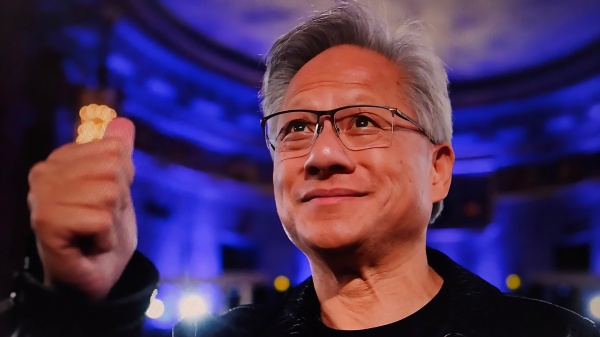
Nvidia CEO Jensen Huang (젠슨 황) has publicly opposed arguments that major artificial intelligence companies should be allowed exemptions from antitrust regulation to slow the development of advanced AI models.
On Sept. 15, Huang said AI safety is important but there is no need to create new laws or relax antitrust rules for that purpose, CNBC reported.
The comments came after an essay released on Sept. 13 by Anthropic CEO Dario Amodei (다리오 아모데이). Amodei proposed that leading AI labs should "regulate the frontier's pace" and intentionally slow the development of more powerful models to secure time for testing and safeguards. He argued such coordination may require government mediation or exemptions from antitrust regulation.
Huang opposed that approach. In an interview on CNBC's "Mad Money," he said it was "completely unnecessary" to think new laws, new antitrust laws or new regulation are needed before those companies do fundamental engineering properly and release products. He added that there are already enough laws and regulations, and argued product reliability and functionality can be handled within the existing system.
The issue is that legal problems can arise if rival AI companies jointly adjust the pace of development and releases. Amodei said government mediation or exemptions from antitrust rules may be needed for coordination among leading AI labs. He explained that because agreements between competitors to limit output or supply can fall under antitrust law, AI companies could face legal risk if they coordinate the pace of model development or releases.
Huang also stressed that AI safety should be addressed in the development process. He said, "Safety is an engineering problem, and testing is an engineering problem," and added that if a product is not ready, companies should delay release and continue testing and development. "You have to make the product and test it properly. If it's not ready, hold it, and keep testing and keep engineering until it's ready," he said.
Huang did not deny the importance of AI safety itself. He said, "AI safety is a real issue," and added that safely designing products people will use is a clear task. At the same time, he added that companies should innovate as fast as possible but should not rush to the point of releasing unsafe products.
Huang also distanced himself from concerns that more advanced AI could threaten humanity's survival. "We are not going to die in 2030," he said, adding that many developers and companies will develop AI properly while advancing safeguards for safety and security.
In his essay, Amodei presented a three-step approach to regulating the speed of AI development. It calls for outside safety evaluators at each lab, then coordination among democratic countries on safety standards, and then limits on the speed of unverified AI progress. He wrote that a method in which influential AI companies jointly regulate the pace of development could be legally tricky and may need government support.
Nvidia's business interests also intersect with the debate. Nvidia has grown into a leading company in the AI semiconductor market on the back of the AI boom, and a slowdown in AI development could also affect the business environment tied to AI infrastructure investment. Nvidia counts Anthropic and OpenAI as major customers and is also developing its own AI models.
The debate shows differing industry views over whether the pace of development itself must be regulated for AI safety, or whether each company should continue developing while securing safety within the existing regulatory framework.
 Seung-a Yoo
ysah@d-today.co.kr
Seung-a Yoo
ysah@d-today.co.kr