
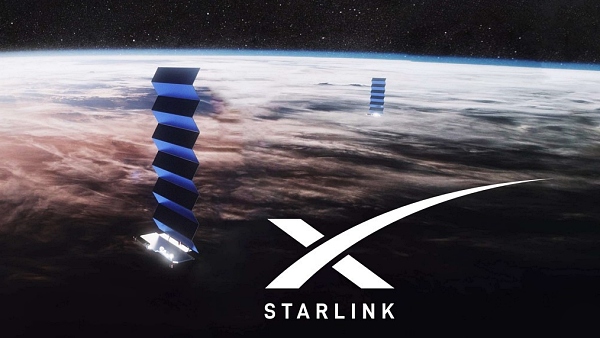
[Digital Today reporter Jinju Hong (홍진주)] Alternatives that could replace Starlink are increasingly coming into focus in the satellite internet market. Analysts say consumers should evaluate service availability by address, total first-year costs, latency and data policies rather than simply comparing monthly subscription fees. Cryptopolitan reported the details on Sept. 14 local time.
Starlink offers residential service in the United States from $55 a month. Because it is based on low Earth orbit satellites, low latency is a strength. By late 2025, independent measurements showed median download speeds by state exceeded 100 Mbps across the United States excluding Alaska.
By contrast, Viasat and HughesNet, which use geostationary satellites, have relatively high latency as a weakness. As of the first quarter of 2025, their median latency was tallied at about 684 milliseconds and 683 milliseconds, respectively. That can be a disadvantage for services where real-time responsiveness matters, such as gaming, video conferencing, remote desktops and VPNs.
T-Mobile's 5G Home Internet is cited as a practical alternative to Starlink. It uses fixed wireless rather than satellites, so no antenna dish is needed, and relatively low latency can be expected where service is available. As of the second quarter of 2026, median download speed was 222.72 Mbps, upload was 18.12 Mbps and latency was 46 milliseconds. Monthly pricing starts at $50 with autopay.
Still, T-Mobile cannot be subscribed to in every 5G service area. Even if a mobile phone connects to 5G, home internet sign-ups can be limited depending on local cell site capacity.
In rural areas, Viasat and HughesNet are still options. The two companies focus on areas without terrestrial fiber internet. HughesNet also operates a fusion product that combines satellite and terrestrial wireless to reduce latency. Even so, users should check priority data caps, equipment rental fees and contract terms together.
Amazon's satellite internet service Leo is still hard to view as a direct replacement for Starlink. Leo, renamed from Project Kuiper, is set to begin initial service in the second half of 2026, but it is not at a stage where ordinary consumers can subscribe across the United States. Consumer pricing, equipment costs and data policies have also not yet been disclosed in detail.
There are more factors to consider for business internet. Starlink offers local priority plans ranging from $55 a month to about $530, and some plans apply service-level agreements based on 99.9 percent uptime. Viasat and HughesNet also provide enterprise support and static IPs, but the most suitable service can vary depending on requirements by business site.
Consumers should not decide based only on promotions before signing up. Free equipment or discounts may come with conditions to maintain service for 12 months or 24 months, and there may be early termination fees and equipment return costs. Users should also check potential additional costs tied to installation location and wiring, roof or pole mounts, and possible quality degradation in severe weather.
Ultimately, the first step in finding an alternative to Starlink is checking the address. If fiber internet or a local fixed wireless network is available, terrestrial-based services such as T-Mobile may be more advantageous. In areas lacking terrestrial networks, Starlink remains a strong option with low latency as its selling point. Amazon's Leo could change the competitive landscape in the future, but for now it is a situation where consumers must wait for its launch.
 Jinju Hong
hongjj@d-today.co.kr
Jinju Hong
hongjj@d-today.co.kr