
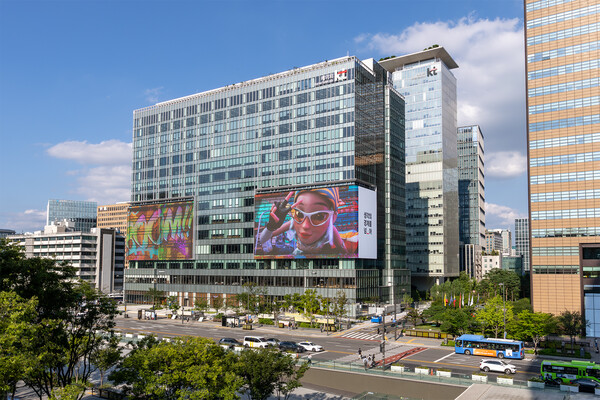
KT is moving to build an AI ecosystem for the public with "IumInside" at the forefront. The key is to have an AI agent move across services and carry out follow-up actions such as bookings, applications and purchases.
KT recently held an online briefing to share its service strategy and implementation plan for the government's "AI for All" project led by the Ministry of Science and ICT. The ministry previously selected KT, SK Telecom and a Kakao consortium as separate AI for All providers.
KT's plan is to tie together services with broad public touchpoints and connect them into a single AI experience. It aims to rapidly spread its AI for All offering across industries through this approach.
At the core is IumInside. Based on an open Model Context Protocol (MCP) approach, IumInside links external services and the AI capabilities of the Ium agent in both directions. KT said users can experience AI for All anywhere without being constrained by channels.
KT's consortium includes platform and service companies with large touchpoints in daily life, such as Daum, Musinsa, Zigbang, EBS, MassPresso and BC Card. The combined service touchpoints held by participating companies total more than 60 million. KT will also provide a software development kit so that not only consortium members but also external companies can apply IumInside, further expanding its public reach.
Jin-hyung Lee (이진형), an executive director and head of KT's AX Business Division, said it aims to connect AI services without channel boundaries. He said any service in South Korea can apply IumInside through a plug-in.
KT is focusing on a user experience that links information provision to actual actions. It also adds memory-based personalisation that remembers users' prior searches, inquiries and behaviour patterns, and proposes services first to fit each user's situation.
For example, when a vehicle inspection due date is approaching, the service will not stop at notifying the user but will proceed to inspection booking and adding the schedule to a calendar. KT is also considering a feature that provides visualised learning materials along with problem-solving when a user uploads a photo of a question during study. In the public sector, it plans to implement AI agent services tailored to a user's situation, such as proactively finding and notifying public benefits based on the user's age and area of residence.
The foundation supporting this is KT's AI operations platform, TokenFactory. It integrates multiple AI models, Rebellions' neural processing unit (NPU) and infrastructure operations technologies from Rableup and Vessel AI, and allocates AI resources to fit service characteristics.
KT said TokenFactory separates Prefill, which processes user input, and Decode, which generates responses, improving tokens per minute by about 31 percent. With prompt compression technology, it can reduce input tokens by up to 80 percent, also improving graphics processing unit efficiency.
KT is expanding companies participating in the ecosystem, targeting a service launch in December. Many companies, including major financial firms and content-related companies, have requested to join. It is also reviewing the launch of some paid services later, such as premium models for experts.
Lee said KT will introduce an AI service for the public that includes digitally marginalised groups by creating an open AI ecosystem through IumInside. He said it will provide fast, accurate and stable AI services based on TokenFactory, which he said condenses top-level multi-model capabilities in South Korea and KT's strengths.
 Jin-ho Lee
jhlee26@d-today.co.kr
Jin-ho Lee
jhlee26@d-today.co.kr