
Tech Developers Day, created to honour the efforts of research and development personnel, was designated as a statutory national commemoration for the first time this year. The government held a ceremony and presented awards to researchers and companies that contributed to strengthening technological competitiveness.
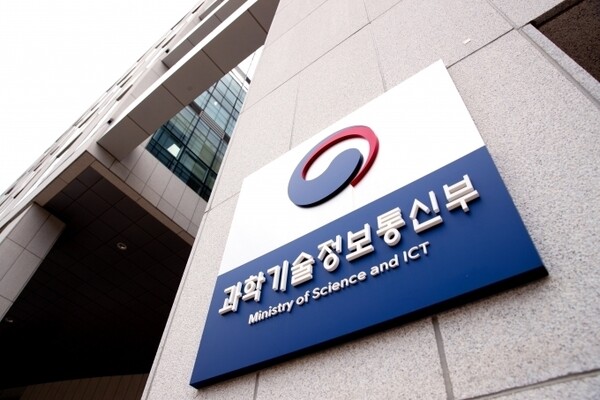
The Ministry of Science and ICT held the 2026 Tech Developers Day ceremony on Sept. 7 at the Fairmont Ambassador Seoul.
The ministry said about 450,000 researchers, as of 2024, work exclusively on R&D at corporate-affiliated research institutes. That is more than 70 percent of the total 610,000 researchers. About 70,000 corporate-affiliated research institutes and dedicated R&D departments were in operation as of June this year.
Attendees included Prime Minister Han Sung-sook (한성숙), National Assembly Science, ICT, Broadcasting and Communications Committee Chairman Song Gi-heon (송기헌) of the Democratic Party, People Power Party lawmaker Choi Hyeong-du (최형두), Vice Minister Koo Hyuk-chae (구혁채) of the Ministry of Science and ICT, and Korea Industrial Technology Association Chairman Koo Ja-kyun (구자균), as well as industry, academia and research representatives.
The ministry granted 55 government awards on the day to contributors to private-sector R&D and technology management. They included 3 orders of merit, 4 medals, 20 presidential citations and 28 prime ministerial citations. It also awarded 35 vice prime minister citations and 11 outstanding researcher awards under the name of the Korea Industrial Technology Association chairman.
Lee Jin-yeop (이진엽), a vice president at Samsung Electronics, received the Innovation Medal of the Order of Science and Technology for contributing to the world’s first mass production of 1Gb NAND flash memory and the development of vertical NAND flash memory, or V-NAND. Song Geun-seok (송근석), a vice president at HK inno.N, received the Woongbi Medal for leading development of a new drug that improved issues related to taking existing stomach disease treatments before meals and delayed efficacy. Jang Ji-eun (장지은), a vice president at SK hynix, also received the Woongbi Medal for contributing to development including ultra-high-capacity server DRAM and low-power, high-bandwidth mobile memory.
The Science and Technology Medal went to Go Gi-ok (고기옥), a team leader at Korea Aerospace Industries, for independently developing flight control laws for the FA-50 light attack aircraft and the Korean fighter KF-21; Ryu Jin-ho (류진호), a POSCO research fellow, for leading development of decarbonisation technologies for the steel industry; Park Woo-jin (박우진), head of global product development research at LS Electric, for commercialising technology to raise the voltage of direct-current power equipment; and Lee Ho-gi (이호기), head of the eco-friendly research centre at Samsung Heavy Industries, for developing a fuel supply system for ships powered by environmentally friendly alternative fuels.
In the individual category of presidential citations, 13 people were selected, including Ahn Byeong-woon (안병운), head of research at Park Systems, who developed and commercialised an atomic force microscope-based semiconductor metrology and inspection system. In the group category, 7 companies won, including CN1, which developed plasma atomic layer deposition equipment for semiconductor processes.
Prime ministerial citations went to 20 individuals, including Heo Seon-a (허선아), CEO of Hyper Neurotech, who contributed to development of carbon composite material frames and smart mobility technologies, and to 8 companies including ATEC, which promoted localisation of core technologies for financial automation devices and development of AI-based interactive devices.
In the category for contributions to promoting corporate research and technology, vice prime minister citations were awarded to 25 individuals and 10 organisations for contributing to innovation and commercialisation in corporate R&D and to building a technology innovation ecosystem.
In the individual category, winners included Park Tae-seo (박태서), a vice president at Justem, for contributing to fundamental technologies for semiconductor devices and processes and localisation of advanced semiconductor equipment. In the group category, recipients included SNC Lab, which developed multi-agent AI-based automated diagnostic technology for digital information accessibility.
Outstanding researcher awards were given to 11 researchers expected to grow into next-generation R&D leaders through R&D projects at corporate-affiliated research institutes.
 Jin-ho Lee
jhlee26@d-today.co.kr
Jin-ho Lee
jhlee26@d-today.co.kr