
As costs for developing new titles rise and predicting commercial success becomes harder, South Korean game companies are using proven intellectual property (IP) to reduce the risks of releases.
Instead of introducing a new universe and characters from scratch, they are moving web novels and webtoons that already have readers and fandoms into games to secure early users and reduce marketing burdens. Nexon is preparing to release "Item Power: Overgeared". Netmarble is preparing "Solo Leveling: Karma" and "Shangri-La Frontier: The Seven Strongest Species". Kakao Games is preparing "World of the Dokkaebi" with the same strategy.
Rising burden of new-title failures
A new IP requires not only building a new universe and characters but also the process of making them known to users. That is why it is hard to guarantee a hit even after investing costs of tens of billions of won.
Popular web novels and webtoons, by contrast, already have awareness and preference formed through existing readers. The burden of designing the universe and characters from scratch is also relatively smaller. The industry calls this the "fandom economy". It can lower the cost of securing a game’s first users and raise the chances of early success after launch.
This approach is not new. Netmarble has previously released games based on popular webtoon and web-novel IP such as "Solo Leveling" and "The Seven Deadly Sins" and has a track record of results. The new titles slated for the second half are also close to an extension of its existing strategy of linking proven IP to game success.
Lowering risk with proven IP
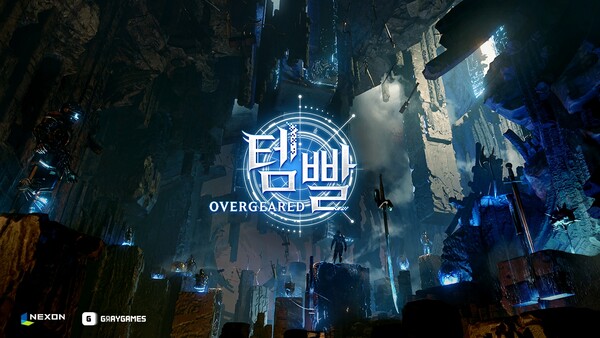
Nexon’s MMORPG "Item Power: Overgeared", which it plans to release in domestic and overseas markets within the year, is based on the web novel and webtoon IP of the same name. "Item Power" has recorded about 1.3 billion views in South Korean web novels and webtoons. The web novel concluded in 2024, and the webtoon is being serialized on KakaoPage. An animation release is also scheduled for October. Overseas, it proved its commercial potential by ranking first in popularity on the Asian web-novel platform Wuxiaworld and fourth in sales on Japan’s Piccoma.
Netmarble’s "Solo Leveling: Karma" is a mobile roguelite action RPG based on the "Solo Leveling" IP, which has expanded into animation. Using the "Cup of Reincarnation" storyline that the original work did not cover in detail, it makes the 27-year monarch war that Sung Jin-woo spent in a dimensional rift the game’s main story. Netmarble expanded touchpoints with original fans, including by running a program at "Anime Expo 2026" held in the United States last month in which Alex Le, the English voice actor for Sung Jin-woo in the original animation, performed scenes from the game himself.
"Shangri-La Frontier: The Seven Strongest Species" is a collectible RPG based on a web novel that has surpassed 1.0 billion cumulative views in Japan and 17 million copies in comics circulation. Netmarble Nexus is faithfully recreating the original universe while adding game-specific elements, including the appearance of original boss monsters. Producer Kyung-ryul Kim (김경률) introduced this as "originality connected to the original work". Netmarble will unveil the first playable version at Tokyo Game Show 2026 in September and will first test the response of the local fandom in Japan, the home of the original work.
Kakao Games’ "World of the Dokkaebi" is a 2.5D MMORPG based on the web novel "Myeolgwi Sudojeon" and is set for an official release in October. The original webtoon began serialization on Naver Webtoon on July 22 and entered the overall top 3 ranking within a day. Kakao Games announced the game’s October release schedule right after the webtoon entered the rankings. This is seen as a strategy to carry early interest formed at the start of the webtoon’s serialization through to the game’s launch. It is also stepping up marketing, including by selecting actor Ji-hoon Park (박지훈) as an advertising model.
Many cases still fall short despite using famous IP
Having an original work does not mean a title is free from failure risk. There are many cases that fell short of expectations even while using famous IP. The higher the expectations of original fans, the greater the disappointment if the game lacks completeness. Without gameplay quality, monetisation structure, the level of reproduction of the original work and operational capability, it is easy to be judged as a "game that only relied on IP."
Conversely, when game quality is outstanding, there are also cases that exceed the original work’s popularity. Netmarble’s "Solo Leveling: Arise" is a representative example. By attracting not only original fans but also global action RPG users, it showed that IP-based games can become a new success model if quality is supported.
The prevailing industry view is that proven IP is a starting point that lowers the burden of new-title failure, but it is not insurance that completely removes risk.
An industry official said, "The time has passed when success was guaranteed just by securing a popular original work," adding, "In the end, how stably you maintain the fandom built by the original work inside the game will decide the success or failure of the new titles in the second half."
 Ho-jung Lee
lhj@d-today.co.kr
Ho-jung Lee
lhj@d-today.co.kr