
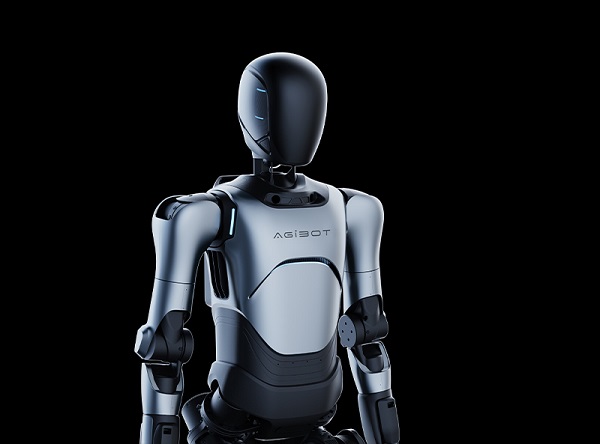
China's humanoid robot company Agibot (AGIBOT) ranked first worldwide in shipments in the first half of 2026, overtaking Unitree Robotics. As the humanoid robot market grows rapidly, Chinese companies are sweeping the top ranks in global shipments and further strengthening their grip on the market.
Cryptopolitan, a blockchain media outlet, reported on Aug. 10 that Agibot shipped about 8,400 humanoid robots in the first half of this year. Its global market share was 44 percent, far ahead of rivals.
Second place went to Unitree Robotics. Unitree shipped about 5,900 units over the same period, taking a 31 percent share. On a full-year basis last year, it shipped 5,500 units to lead globally, but it ceded the top spot to Agibot in the first half of this year.
Agibot's growth has been especially steep. Market research firm Smart Analytics Global tallied Agibot's first-half shipments this year as up 562 percent from a year earlier. The industry cited Agibot's diverse product lineup as a driver. Sales were not concentrated on a single flagship model; it supplied multiple product lines at the same time, absorbing demand broadly, the analysis said.
By contrast, Unitree expanded its market around a single model, the G1. Demand for the G1 was concentrated in relatively specific uses such as schools, laboratories and live performances. Unitree also maintained strengths in its existing markets, but differed from Agibot in terms of its product portfolio.
The global humanoid robot market itself is also showing explosive growth. Global shipments in the first half of this year were about 19,100 units, more than tripling from about 5,100 in the same period last year.
Demand was centered on industrial and commercial uses. More than 70 percent of total first-half sales came from industrial and commercial sectors. On the ground, humanoid robots are being deployed in auto and electronics manufacturing plants and logistics warehouses to carry out tasks such as moving goods, assembling parts and conducting inspections.
Company rankings underscored China's dominance. After Agibot and Unitree, UBTECH ranked third with a 5.2 percent share, and Leju was fourth with 4.9 percent. All of the top four companies were Chinese. China's edge by shipment volume was also overwhelming. Chinese manufacturers were tallied as shipping about 18,500 humanoid robots in the first half of this year. That means Chinese companies accounted for more than 97 percent of total shipments.
The gap with U.S. companies was also large. Shipments by major U.S. humanoid companies such as Tesla, Figure AI and Agility Robotics totaled only about 4,000 units.
Competition for leadership in the humanoid robot market is also extending to capital markets. Unitree began subscription orders on Aug. 10 for a listing on Shanghai's STAR Market. The offering price is 150.80 yuan per share, and it plans to raise about 6.1 billion yuan through the offering. Its expected market capitalisation after listing is about 60.99 billion yuan.
Agibot is also pursuing a Hong Kong listing in the second half of this year. After taking No. 1 globally in first-half shipments and moving ahead with an initial public offering, the competition between Unitree and Agibot is expected to extend beyond robot sales volumes into capital markets as well.
As the humanoid robot market rapidly expands from the research and development stage to actual industrial sites, Chinese companies are accelerating efforts to pre-empt the market by leveraging production scale and product diversity. Key points to watch in the global humanoid market are whether Agibot can sustain its No. 1 position and whether Unitree will broaden its product lineup beyond its G1-centred strategy and mount a counterattack.
 Jinju Hong
hongjj@d-today.co.kr
Jinju Hong
hongjj@d-today.co.kr