
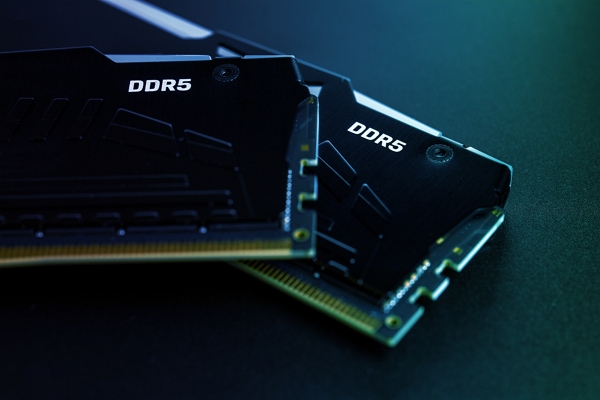
[DigitalToday reporter Jinju Hong (홍진주)] A global surge in memory prices is forcing changes in PC operating-system strategy. Microsoft has effectively withdrawn its recommendation of 32GB of RAM for high-performance PCs and has begun work to optimise Windows 11 to run smoothly even with 8GB of memory.
On Aug. 6, local time, IT outlet TechRadar reported that Microsoft deleted a document on 32GB RAM that had been posted on the Windows Learning Center. The document said 32GB of memory was an "ideal" level for running high-end games and a capacity users could use without worrying about performance degradation.
The link to the document now directs to the main page of the Windows Learning Center. The industry views Microsoft as having adjusted its previous guidelines after criticism that, with memory prices surging recently, the 32GB recommended specification no longer matches reality.
Microsoft has effectively emphasised 16GB of memory as a baseline alongside its Copilot+ PC strategy. But as shortages and rising prices for PC DRAM persist, the cost burden of products equipped with higher-capacity memory is growing.
Microsoft has recently reintroduced 8GB RAM models in its Surface Pro and Surface Laptop lineups. With it becoming harder to present 16GB as a minimum requirement, maintaining a 32GB recommendation could increase the burden on consumers, according to the assessment.
The operating system itself is also responding to the changes. Microsoft plans to carry out improvements through year-end so that Windows 11 runs faster in an 8GB memory environment. The measure aims to maintain the user experience even on lower-priced devices with reduced memory capacity.
Apple is also not spared from the impact of the memory supply crunch. Apple recently showed through the MacBook Neo equipped with 8GB of RAM that it can draw performance even with a relatively low memory capacity, but stable 확보 of memory is needed to produce the product.
In particular, Apple is facing a problem sourcing mobile DRAM needed for next-generation iPhone and MacBook lineups. It held supply talks with Chinese memory maker ChangXin Memory Technologies (CXMT), but pricing terms were reported to have become an obstacle.
With sufficient demand in China, CXMT had little need to offer Apple a specially low price and was reported to have maintained prices similar to, or higher than, levels offered by Samsung Electronics and SK Hynix. For Apple, the effect of securing a new supply chain is limited.
The market is also paying attention to Apple’s moves to secure memory ahead of the launch of the iPhone 18 series and foldable products. Bloomberg Intelligence analyst Tim Culpan reported that Apple and its suppliers are focused on securing enough memory chips for new product launches.
The trend shows that a memory supply shortage triggered by expanded AI investment is spreading across the PC and smartphone markets. As demand for high-bandwidth memory (HBM) for AI servers grows, major memory makers have focused on producing higher value-added products, and the ripple effects have driven up prices for general-purpose DRAM.
For consumers, pressure for higher PC and smartphone prices could increase. By contrast, memory makers such as Samsung Electronics and SK Hynix are expected to benefit from expanding demand for AI memory. In particular, companies with strong competitiveness in higher value-added products such as HBM4 may be able to sustain high profitability in the second half, the analysis said.
Ultimately, the memory shortage is changing not only semiconductor supply but also Big Tech product design and operating-system strategy. Microsoft has shifted from recommending higher-capacity memory to optimising for lower capacity, and Apple has a new task of securing memory for next-generation devices. Price trends for PCs and mobile devices in the second half are expected to vary significantly depending on the memory supply situation.
 Jinju Hong
hongjj@d-today.co.kr
Jinju Hong
hongjj@d-today.co.kr