
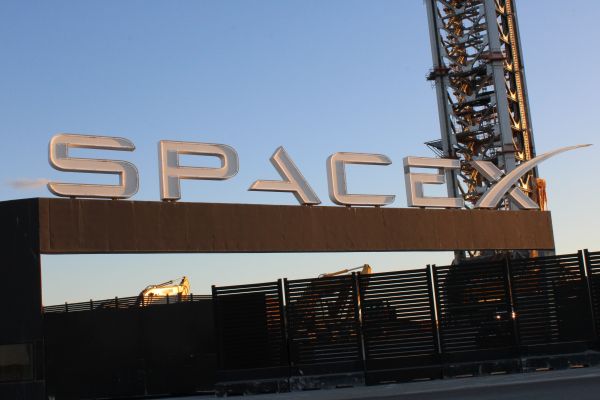
[Digital Today reporter Jinju Hong] SpaceX shares fell 13.6 percent after its first earnings report since listing, but CNBC host Jim Cramer said it is a company investors should evaluate on growth potential decades ahead rather than near-term results.
According to CNBC on Aug. 5, Cramer said investors should not view SpaceX as a typical listed company centered on quarterly earnings and should take a long-term approach.
He compared SpaceX to past railroad investments and called it a company that could become a “100-year certificate.” He said investors should focus on the possibility it could grow into an infrastructure company lasting into the next generation, rather than on immediate revenue or profitability.
The share decline came right after the first results disclosed since the company’s June initial public offering. The company said quarterly revenue beat market expectations, but capital spending also rose sharply. The market is seen as having reacted more sensitively to the burden of large-scale investment and future profitability than to revenue growth.
Additional pressure factors remain. Cramer pointed to the potential for increased selling pressure in the near term as a lock-up on about 911 million shares held by existing shareholders is lifted. He stressed, however, that investors focused on such short-term volatility could miss SpaceX’s long-term business value.
Cramer’s positive view of SpaceX’s long-term growth is based on Elon Musk’s fundraising ability and capacity to expand the business. “If Musk weren’t there, I would never have recommended SpaceX,” he said. “I am convinced Musk can raise all the money he needs,” he said.
SpaceX’s future growth engines include the reusable rocket Starship, the satellite internet service Starlink and a computing infrastructure business. The computing business has recently drawn market attention. SpaceX is also being discussed as potentially expanding a computing leasing business for external companies beyond using its own space and AI infrastructure, and it is reported to have signed computing-related contracts with Anthropic and Google.
Cramer said these businesses are areas likely to grow over years to decades rather than deliver results in a short period. “Someday this stock could be a big winner,” he said. “But I don’t know when that day will come,” he said.
As a result, market views on SpaceX are likely to split into two tracks for the time being. In the near term, the first post-listing results, increased capital spending and the large volume of shares coming out of lock-up are burdens. Over the longer term, business expansion combining rockets, satellite internet and computing infrastructure, along with Musk’s fundraising ability, remains a key point to watch.
 Jinju Hong
hongjj@d-today.co.kr
Jinju Hong
hongjj@d-today.co.kr