
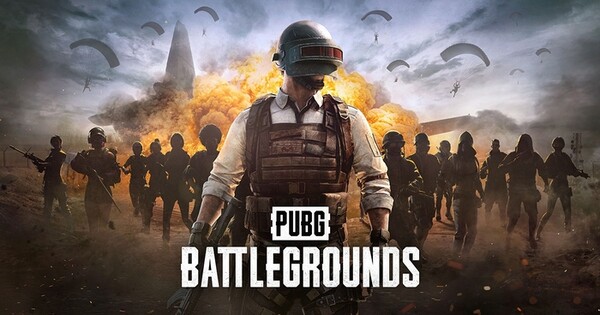
Game companies that have grown around online and mobile titles are expanding into the physical trading card game (TCG) market. The strategy is to move in-game characters and worldviews onto cards so users consume intellectual property (IP) even when they are not logged in. It also appears aimed at drawing in not only existing gamers but also collectors and offline users.
According to the industry on Wednesday, Krafton is teaming up with card game developer Cardmonster to prepare a physical card game using the 'PUBG: Battlegrounds' IP. Riot Games will also release a physical TCG, 'Riftbound', set in the 'League of Legends (LoL)' universe in South Korea in September.
Behind top-tier online game IPs moving into the offline card market in succession is the potential of the physical card business proven by Pokemon.
◆ Standalone TCG or IP alliance model
Game companies' approaches to entering the TCG market largely split into two. One is building an independent card game brand using only a company's own IP. The other is layering a company's IP onto a specialised TCG already in operation.
Examples of creating a standalone TCG based on a company's own IP include Krafton, Riot Games and Devsisters.
Krafton has formed a partnership with card game specialist developer Cardmonster and plans to implement Battlegrounds' core survival competition and the tension of becoming the 'last one standing' in a card game. Specific launch timing and how the game will be played have not been disclosed. Still, it differs from simple character merchandise in that it reconstructs a battle royale focused on real-time combat into a deck-and-rules-based card game.
Riot Games' Riftbound has players build decks with champion and army and spell cards, then compete with 2 to up to 4 people. It ran an experience space at the '2026 LoL Mid-Season Invitational (MSI)' fan festa in July, and revealed cards commemorating T1's World Championship win and Korea-exclusive promotion cards. The goal is to convert existing e-sports fans into card game users and shift online fandom into offline touchpoints.
Of the three companies, Devsisters entered this path the earliest. After launching 'CookieRun: Braverse Card Game' in September 2023, it has expanded the business into North America and global markets. Last year, worldwide distribution contract volume exceeded 50 million cards.
In April, it held its first global tournament, the 'World Championship'. In June, it officially joined eBay-run global TCG trading platform 'TCGplayer' and secured a dedicated category. The move aims to build a standalone ecosystem that extends beyond product sales into tournaments, communities and secondary trading.
By contrast, the Korean-made TCG 'Nibelarena' developed by Gemble Company is an IP alliance model. Shift Up's 'Goddess of Victory: Nikke' and 'Stellar Blade', Smilegate's 'Epic Seven', Neowiz's 'BrownDust2', and Nimble Neuron's 'Eternal Return' are gathered under a single set of card rules. Nexon Games' 'Blue Archive' will newly join in November, and a schedule related to 'BrownDust2' will follow in December.
For game companies, this allows IP to be expanded into physical cards without directly building a card game's development, production and distribution network. For Nibelarena, it can absorb each game's fandom every time a new IP is added.
The 'Stellar Blade Nibelarena' booster pack released in May included around 50 types of original illustrations exclusive to the card game. It targets collection demand separately with images available only on the cards, beyond reusing original on-screen scenes.
◆ Why game companies are turning to paper cards
Behind this movement is the physical card market built up by Pokemon. As of the end of March this year, cumulative global production of the Pokemon TCG has exceeded 85 billion cards and it is sold in more than 90 countries. Trading has also increased in South Korea, with transaction value in the Pokemon TCG category on limited-edition trading platform Kream rising about 35 times in the first half of this year from the previous half.
TCGs are a genre that can secure as customers both players who build decks to battle and collectors who seek rare cards and illustrations. It can continuously release new card packs and expansion packs, and broaden the business through offline card shops, tournaments and user-to-user trading, which is also attractive to game companies.
Unlike digital items, users can directly hold physical items. Even when users are not logged in, collecting and trading cards and participating in tournaments can keep touchpoints between users and the IP.
It can create a structure that links interest in characters and worldviews formed through gameplay to card purchases, collecting and tournament participation, and then sends that back to consumption of the original IP. The analysis is that it can complement existing game businesses while broadening routes for IP consumption.
◆ Player ecosystem is key to long-term success
Still, using a well-known IP does not guarantee long-term success. To retain users even after initial purchases by fans of the original, the card game itself needs strategic depth, a steady supply of new cards, and balance management among cards.
It also needs offline stores where cards can actually be used, regular tournaments, and an environment that beginners can enter. If only the trading prices of rare cards are highlighted, demand for investment and resale rather than the game itself could end up steering the market.
Ultimately, the success or failure of game companies' TCG businesses is likely to hinge not on first card-pack sales but on how well they can build an independent player ecosystem. That is because continued expansion-pack sales and fandom growth are possible only if they go beyond bringing original fans in as card buyers and convert them into users who build decks and join tournaments.
An industry official said, "Overseas, game IPs entering TCG has already become a kind of formula." The official added, "But because overseas success cases are also the result of having refined the quality of the cards themselves and tournament and distribution networks over a long period, there is criticism that domestic game companies should first build such operational capabilities rather than jumping in relying only on IP."
 Lee Ho-jung
lhj@d-today.co.kr
Lee Ho-jung
lhj@d-today.co.kr