
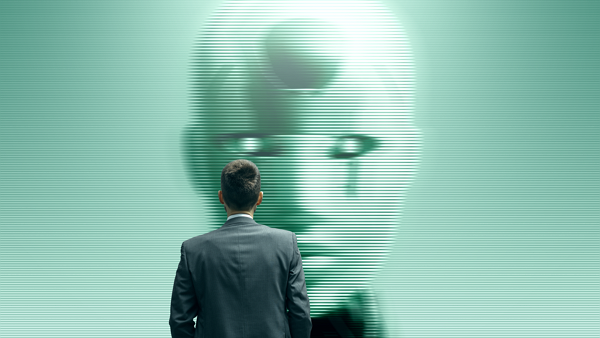
Steve Hanke (스티브 행크), an applied economics professor at Johns Hopkins University, strongly criticised optimism that AI will be provided at near-zero cost and drew a line on replacing human jobs.
Business Insider reported on Aug. 2 that Hanke said belief that AI can spread at virtually no cost is detached from reality and “economically a wrong judgment”. He said AI is a highly resource-intensive technology that requires huge amounts of electricity and water, as well as physical capital such as graphics chips.
Hyperscale IT companies including Microsoft, Alphabet, Amazon and Meta are racing to build data centres to run next-generation AI models and expect combined capital spending of about $700 billion this year. A projection was also presented that the figure could reach $1 trillion in 2027. Hanke said the scope of the AI revolution will be determined by how much of the cost of scarce resources consumed by AI is bearable.
Hanke also set some limits on claims that AI will cause large-scale job destruction. He said companies will not fire all employees and replace them with AI. In many cases, the cost of adopting AI could be higher than hiring people. That means even if AI replaces labour, economic viability is not guaranteed in every area.
Hanke criticised AI optimists for comparing AI to existing software in a wrong way. General software can be sold repeatedly with almost no additional cost after it is developed, but AI services continue to incur computing and infrastructure costs each time they are provided to customers. He described some AI seers as close to braggarts and warned against rosy forecasts that ignore cost structures.
AI optimists, by contrast, argue that costs will gradually fall as semiconductors and data centre efficiency improve. Elon Musk (일론 머스크), Tesla's chief executive, has predicted that AI will boost productivity sharply and lower production costs, ushering in an era of abundance. He has also argued that over the long term money will matter less and that if AI replaces most jobs, the government should provide universal high income.
Hanke has previously viewed AI as an overhyped and potentially dangerous technology. Recently, entrepreneur Mark Cuban (마크 큐번) and investor Michael Burry (마이클 버리) also expressed concerns about the scale of AI investment and an Nvidia-centred ecosystem. Cuban described the situation as scary in which the AI boom depends too heavily on Nvidia, and Burry warned that Nvidia's structure of supporting chip sales through dealings with customers could inflate circular spending too much.
 Jaewon Choi
ittt_0801@d-today.co.kr
Jaewon Choi
ittt_0801@d-today.co.kr